Trump announces White House ban on CNN, MS NOW and Politico
The US president has targeted three news organisations over their coverage, drawing constitutional objections and warnings of legal challenges.
By James Reeve, Foreign Affairs Writer
Published 19 Sept 2026, 07:00
What happened
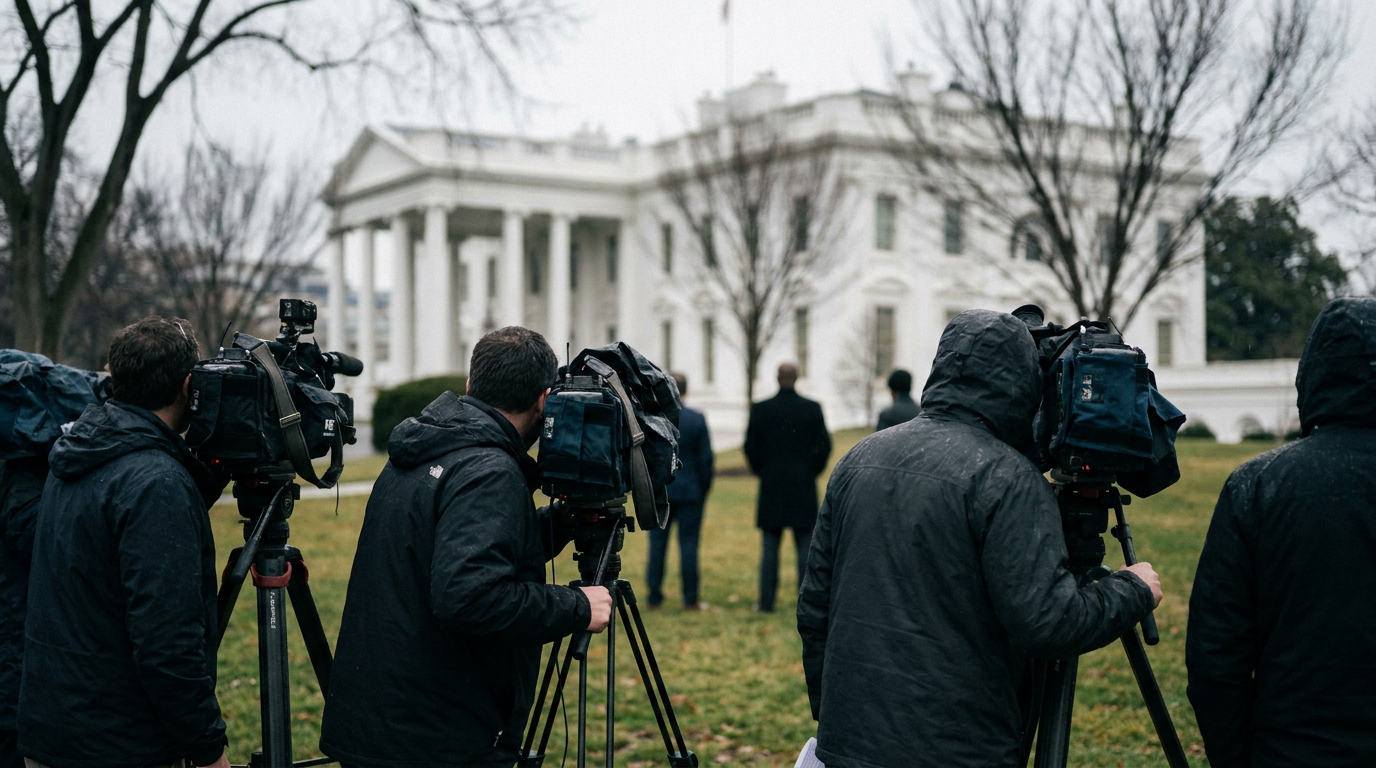
Donald Trump has announced that CNN, MS NOW and Politico are to lose access to the White House, escalating his confrontation with news organisations that cover his administration. The US president said on Friday that the exclusion would take effect immediately and warned that he could target further outlets.
He announced the decision on Truth Social, accusing the three organisations of publishing false accounts of his presidency. Later, when questioned about which other organisations he might act against, he criticised the New York Times and the Washington Post.
The announcement did not immediately remove all the affected journalists from presidential coverage. CNN and Politico reporters remained inside the White House grounds shortly afterwards, while a CNN crew accompanied Vice-President JD Vance on a journey to and from an event in Iowa.
Trump defended his decision during an Oval Office event about his administration’s healthcare policies. He attributed it to dissatisfaction with coverage accumulated over several years, rather than a particular story published that day, and said there was no special reason for announcing it on Friday afternoon.
During those exchanges, Trump identified Breitbart and some Fox coverage as examples of reporting he considered fair. He argued that persistent publication of stories he regarded as false justified keeping news organisations away, and said courts should not permit such reporting to continue unchecked.
The three organisations have responded differently. CNN rejected the proposed restriction and supported its White House journalists; Politico pledged to defend its constitutional protections and keep covering the presidency. MS NOW, which previously operated as MSNBC, declined to comment.
The background
Access to the president has been a recurring point of conflict since Trump began his second term in January 2025. He and administration officials have repeatedly confronted White House correspondents, including during exchanges in the Oval Office, aboard Air Force One and at presidential events.
The administration has also brought conservative bloggers, online influencers and other media representatives into the press room. Trump has presented that expansion as a way to give Americans a wider range of perspectives on the government’s activities.
A separate change announced in February transferred control of the presidential press pool to the White House. For more than a century, the White House Correspondents’ Association had managed that arrangement, which determines the small group of journalists able to accompany the president in settings with restricted space.
Pool journalists make their coverage available to other news organisations. The system allows an event attended by a limited number of reporters, photographers or camera crews to reach audiences far beyond the outlets whose staff are physically present.
CNN has a particular role in that shared coverage: it is one of five US news organisations that provide video for the pool. Its access therefore affects the gathering of material that other broadcasters can use, as well as the network’s own reporting.
In February, the administration also restricted access for Associated Press reporters and photographers to places including the Oval Office and Air Force One. That dispute concerned the agency’s continued use of Gulf of Mexico rather than Trump’s preferred name, Gulf of America. Associated Press challenged the restrictions in court, and the litigation continues.
What people are saying
CNN’s response centred on the constitutional protection afforded to its journalism. The network said its White House team produced accurate, fair coverage and argued that government interference with that work would breach its rights. It described implementation of the president’s threatened exclusion as unlawful.
Politico said it intended to cover both the current administration and its successors fairly. Its commitment to resist restrictions invoked the First Amendment, the provision of the US Constitution protecting freedom of speech and freedom of the press.
Jacqui Heinrich, the Fox News journalist who leads the White House Correspondents’ Association, defended the journalists affected. She framed the dispute as a matter of public access to independent information about presidential policies and decisions, rather than solely a question of working conditions for correspondents.
Democratic senator Chris Coons accused Trump of using presidential authority to penalise independent journalism. He characterised the decision as authoritarian and called for the protection of reporters’ ability to scrutinise those exercising political power.
Jameel Jaffer, executive director of the Knight First Amendment Institute at Columbia University, said the president could not lawfully punish journalists for coverage he disliked. He compared that principle with constitutional limits on retaliation against universities over their teaching or law firms over the clients they represent.
Jaffer also argued that the press pool qualifies as a public forum under the First Amendment. On that interpretation, excluding a journalist because of their viewpoint would create an additional constitutional problem beyond punishment for unfavourable reporting.
Bruce Brown, president of the Reporters Committee for Freedom of the Press, said allowing some journalists access while excluding others because of their coverage amounted to discrimination based on viewpoint. His organisation, which provides legal support to the media, expected courts to overturn the restriction quickly.
Seth Stern, chief of advocacy at the Freedom of the Press Foundation, likewise condemned the move as incompatible with the First Amendment. He argued that earlier presidential retaliation had failed to deter investigative coverage and that the latest action demonstrated hostility towards an informed public.
What happens next
The announcement is likely to trigger legal challenges over the administration’s authority to restrict journalistic access. Trump himself acknowledged that litigation could follow, while suggesting that making his objections public had value to him regardless of whether the exclusion survived judicial scrutiny.
There is a precedent involving CNN from Trump’s first term. The White House withdrew correspondent Jim Acosta’s credentials, prompting the network to sue. Acosta subsequently regained his credentials, making that episode an earlier example of a court challenge followed by restored access.
The continuing Associated Press case provides a separate legal dispute over restrictions on presidential coverage. It concerns access to limited-capacity settings, whereas Friday’s announcement named three organisations for exclusion from the White House. Both disputes involve government decisions about which journalists may attend.
The president’s warning about additional organisations extends the confrontation beyond those already named. For the affected outlets, the next legal question would centre on whether access can be withdrawn because the administration objects to their journalism—the issue highlighted by the press-freedom organisations opposing the decision.
Why this matters
For UK audiences, the press-pool system connects access in Washington with coverage received at home. The BBC participates in the White House radio pool, while shared video arrangements allow presidential events to be covered beyond the small group of organisations admitted in person.
Restrictions on those gathering that material can therefore have consequences outside the United States. At stake is the ability of journalists to observe presidential activity directly and question the administration, alongside their separate ability to publish criticism of its decisions.
Reporting that informed this story
- BBC News: Trump says he is banning CNN and Politico from White House
- The Guardian UK: Trump bans CNN, MS Now and Politico from White House
This article was written independently by The Daily Times from publicly available facts and headlines. No text has been copied from the outlets above.