Nato jets down drone in Lithuania after overnight phone alerts
A drone entering from Belarus was destroyed near Kaunas after residents received warnings, as neighbouring Poland stepped up its own air defences.

By James Reeve, Foreign Affairs Writer
Published 15 Sept 2026, 07:01
What happened
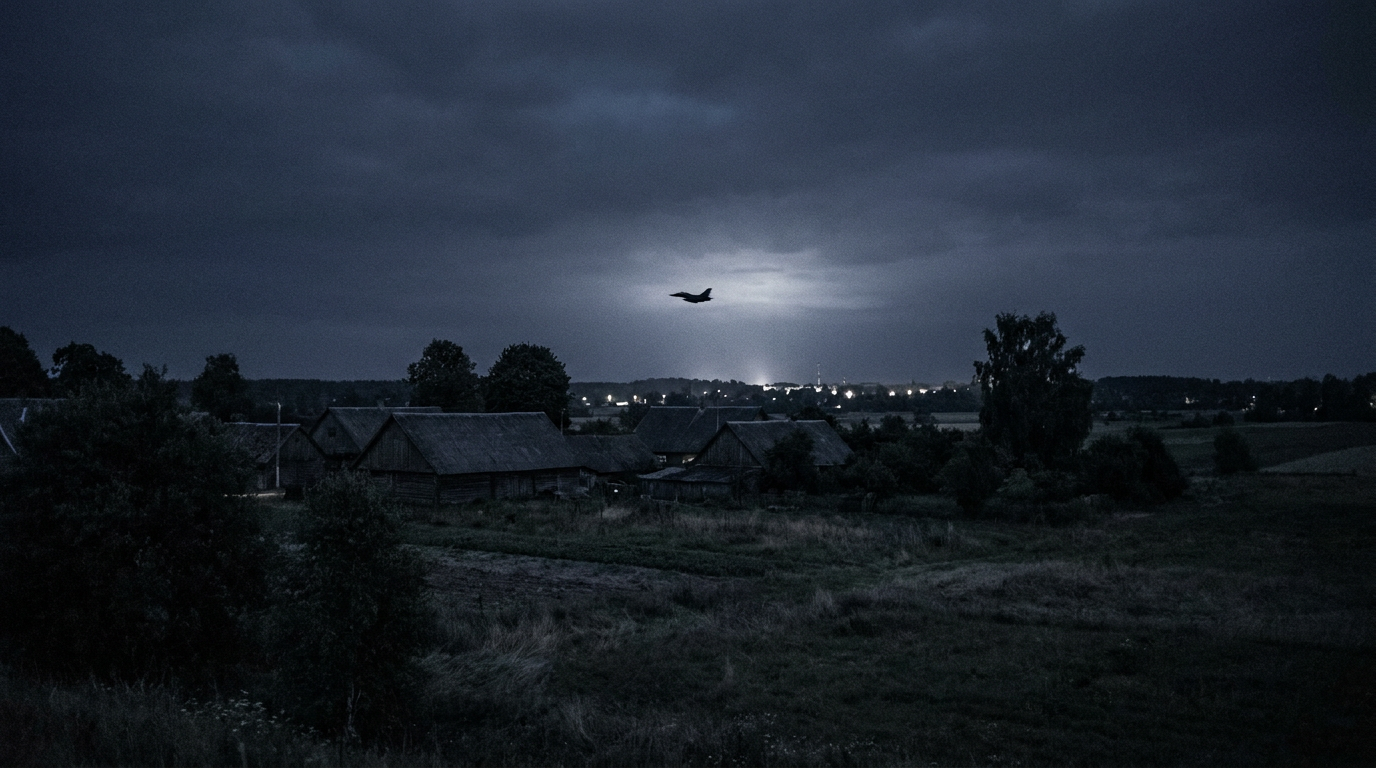
Lithuania has recorded its first drone shootdown inside its territory after Nato fighters intercepted an aircraft that had crossed the border from Belarus. Residents in the capital and two other areas received emergency phone warnings before the overnight interception on Tuesday.
The aircraft was travelling west, according to Lithuania’s crisis management centre. Emergency authorities placed the interception near Pratkunai, a village in central-southern Lithuania outside Kaunas and more than 30 miles from the Belarusian border.
Phones in Vilnius, Trakai and Elektrėnai received the warning shortly after midnight local time. Allied aircraft destroyed the drone about half an hour later, putting the public alert and the military response within a short overnight period.
Lithuania’s defence ministry credited both its armed forces and Italian pilots assigned to the Nato air defence mission. The operation brought together the country’s own military and allied personnel deployed to help protect its skies.
The drone’s route took it into a country bordering Belarus along substantial stretches of its east and south. Belarus is a close Russian ally, led by Alexander Lukashenko, and sits between Lithuania and the territory north of Ukraine.
The background
The interception followed another episode on Sunday, 13 September, when people reported drone sightings in Lithuania. The crisis management centre subsequently assessed that an object had probably arrived from Belarus, crossed Lithuanian territory and continued into Russian airspace. That episode did not prompt air-threat warnings.
Lithuania had also experienced disruption from a drone alert in May. People in Vilnius took shelter, while flights and rail services were temporarily suspended. That earlier event demonstrated how an airspace warning can affect civilian movement as well as military operations.
Drone incursions have repeatedly affected Lithuania, Latvia and Estonia since Russia launched its full-scale invasion of Ukraine in 2022. All three Baltic countries border Russian territory, placing their airspace along the alliance’s eastern edge.
In May, a Nato fighter destroyed a Ukrainian drone over Estonia. It was the first time since the full-scale invasion that Nato’s Baltic air-policing operation had shot down a foreign drone inside a Baltic state’s airspace. Tuesday’s interception marked a separate national first for Lithuania.
Other Ukrainian drones have strayed into Estonia and Latvia this year, drawing responses from Nato aircraft. Ukraine has attributed such deviations to Russian electronic warfare, which can interfere with navigation and alter the course of an unmanned aircraft. That explanation concerns those Ukrainian drone incidents.
The three Baltic states joined Nato in 2004. Their membership places them within the alliance’s collective-defence arrangements, while allied air-policing deployments provide a continuing military presence. Such deployments allow aircraft and crews from other member countries to contribute to the protection of Baltic airspace.
The situation in Poland
Poland also activated military aircraft overnight as Russia carried out drone attacks against Ukraine. The Polish military described the flights as a precaution, intended to protect national airspace, particularly near areas exposed to the fighting across the border.
Those operations came less than a day after Poland recovered a suspected Russian drone from the Baltic Sea. A military hydrographic vessel retrieved it off Rusinowo, a coastal village near Jarosławiec in the north of the country.
Polish defence minister Władysław Kosiniak-Kamysz said an initial examination pointed to a Russian military aircraft. A spokesperson for the armed forces said its appearance suggested it was a Gerbera, a long-range drone built using inexpensive materials including plywood and foam.
Gerbera drones are frequently deployed as decoys, but they can also carry explosives. The distinction matters for understanding their military role: an aircraft intended to draw attention from air defences can form part of an attack even when it is not itself carrying a warhead.
The regional incidents also followed a Russian drone strike on a passenger train close to Ukraine’s border with Poland on Sunday. Former British prime minister Boris Johnson and foreign diplomats had travelled along the same railway line shortly before the attack.
Johnson had been travelling on a private train which accelerated towards Poland after an approaching drone was detected hundreds of kilometres away. The train episode placed a former UK prime minister among those whose journey was affected by the threat from Russia’s drone operations.
What people are saying
Lithuanian president Gitanas Nausėda thanked allied personnel in an early-morning message on X. He linked the importance of military readiness in the region to Russia’s escalating aggression against Ukraine and said Lithuania would protect its airspace alongside its Nato partners.
Foreign minister Kęstutis Budrys emphasised the value of allied forces being stationed in the country. In his response on Tuesday morning, he presented their role as a practical demonstration of Nato solidarity and of the alliance’s determination to remain prepared to act.
The Lithuanian defence ministry praised the speed and responsibility of the response by national forces and the Italian pilots. Its assessment focused on the personnel who carried out the operation, placing the overnight interception within the work of the existing allied mission.
In Poland, prime minister Donald Tusk has repeatedly urged Nato members to prepare for more provocations from Moscow. His warnings concern the wider security environment confronting the alliance, beyond the individual aircraft recovered from Polish waters on Monday.
What happens next
Nato’s air-policing role provides the standing framework for responding to further airspace incidents. Allied crews operate through shared surveillance and command arrangements, enabling aircraft to be sent to identify and, where necessary, intercept a potential threat. The mission is a continuing duty rather than a deployment created for this incident.
Collective defence is governed separately by Article 5 of Nato’s founding treaty. It treats an armed attack against one member as an attack against the alliance, but does not mean that every airspace violation automatically starts a war involving every member country.
Under that treaty, each ally takes the action it considers necessary to assist a member suffering an armed attack; that action can include military force. Decisions about collective defence therefore involve an assessment of the event and consultation between governments, rather than following automatically from a fighter being scrambled.
Why this matters
For the UK, Lithuania’s security falls within the same treaty commitments that protect Britain. The Italian contribution to Tuesday’s operation illustrates how those arrangements work across national boundaries: forces supplied by one ally can help defend the territory of another, far from their own borders.
For British travellers in the region, emergency warnings can have immediate consequences for journeys. Lithuania’s May alert interrupted both air and rail transport, while Poland’s latest precautionary flights covered areas near the conflict. The effects of drone activity can therefore extend beyond Ukraine to civilian life inside neighbouring Nato countries.
Reporting that informed this story
- Daily Mail: NATO fighter jets shoot down drone over Lithuania as locals sent urgent phone warning
- The Guardian UK: Nato jets shoot down drone violating Lithuania’s airspace
This article was written independently by The Daily Times from publicly available facts and headlines. No text has been copied from the outlets above.