Burnham's social care plan could take decades, Dilnot warns
Sir Andrew Dilnot says a fully state-funded care service for England could cost more than £18bn a year, with reforms now tied to the next election.
By James Reeve, Foreign Affairs Writer
Published 28 Sept 2026, 13:01
What happened
Prime Minister Andy Burnham’s ambition for an NHS-style social care service in England could take decades to achieve, economist Sir Andrew Dilnot has warned, as the government prepares to put its plans to voters at the next general election.
Burnham outlined his approach at the start of the Labour Party’s annual conference in Liverpool on Sunday. He envisaged a system funded through shared contributions that would provide cover for everyone, and did not exclude higher taxes to pay for it.
Dilnot, who chaired a commission on care funding 15 years ago, interpreted that ambition as extending beyond help with personal care to include residential costs. Speaking on BBC Radio 4’s Today programme, he said delivering something so comprehensive could require many years of work.
Burnham linked his determination to reform care to the recent death of his father, Roy, who had Alzheimer’s disease and lived in a care home. He said that experience had strengthened his resolve to address a problem successive governments had struggled to settle.
The prime minister had first promised a national care service in July, shortly after taking office. Dilnot said the move towards an election manifesto commitment put reform further into the future than that earlier announcement had suggested.
The background
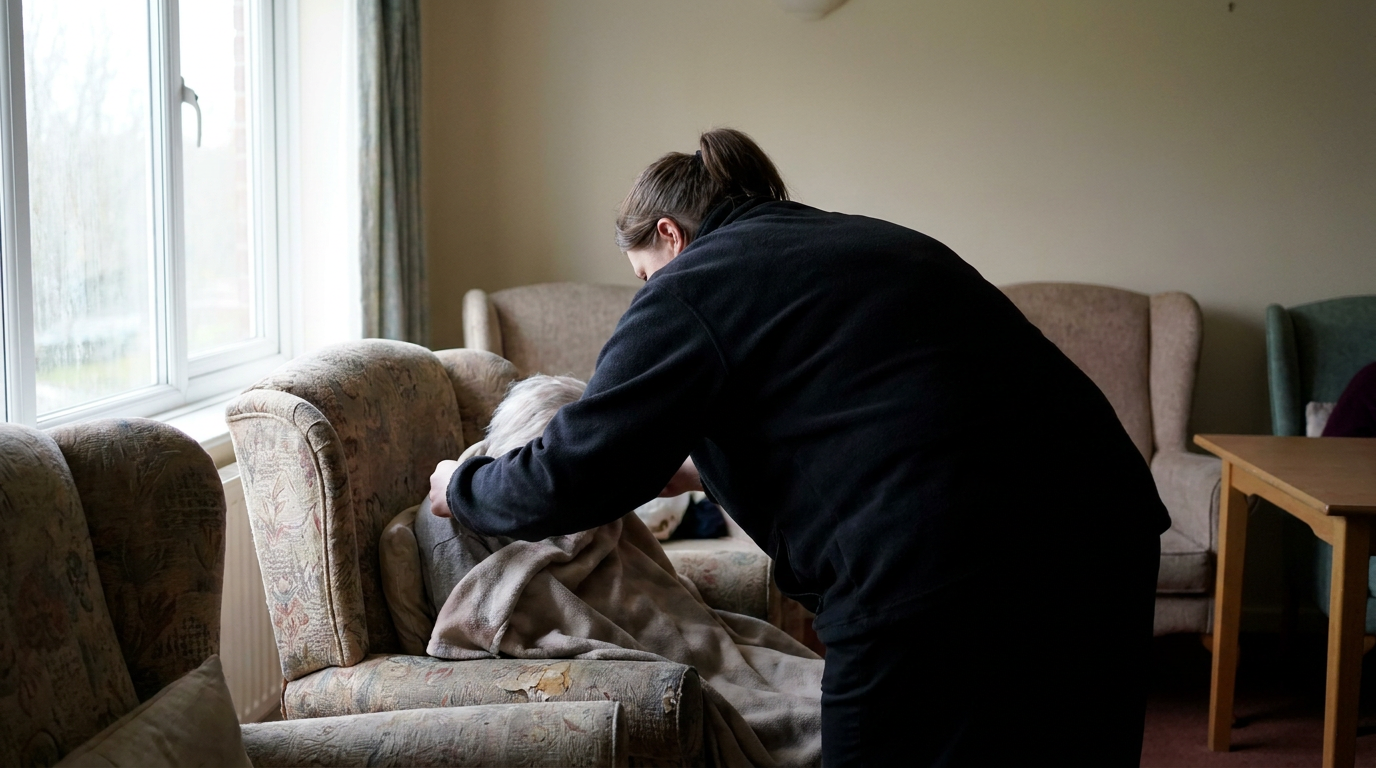
Adult social care helps people manage daily life and maintain their independence, including through support in their own homes. In England, it operates on a different financial basis from the NHS: people can be required to pay for their care themselves, with some facing large bills.
Attempts to change those arrangements stretch back across several administrations. Sir Tony Blair launched a royal commission on social care; if Labour presents its new proposals at an election in 2029, three decades will have passed since that initiative.
Dilnot’s own commission recommended limiting the amount individuals would have to contribute over their lifetime. A cap would leave people responsible for costs up to a specified level, rather than replace individual payments with a fully government-funded service.
The Conservative-Liberal Democrat coalition led by David Cameron accepted the commission’s recommendations. Implementation was subsequently postponed until 2020, with Cameron citing pressure on public finances, and later Conservative governments abandoned the cap.
Theresa May’s government also withdrew a different proposal affecting people receiving care at home. Under that plan, those worth at least £100,000 would have had to meet the full cost. Opponents attacked the policy as a tax on dementia.
Burnham has previously pursued a national care service himself. As health secretary under Gordon Brown, he put forward an approach that included a compulsory payment from people’s estates after death. Political opponents portrayed that funding mechanism as a tax on dying.
Those proposals did not progress after Labour lost the 2010 general election. In the current debate, Burnham has kept a proposed 10% levy on inheritances among the possible funding options, bringing estate-based contributions back into consideration.
How care funding differs across the UK
England and Northern Ireland apply a financial threshold to council help with care costs. People whose assets exceed £23,250, including their home where it counts towards the assessment, are outside that support. Wales also uses means testing to determine financial assistance.
Scotland funds personal care for adults assessed as needing it. That covers assistance with activities such as eating and bathing, so eligibility for that element rests on an assessment of care needs rather than an individual having to meet the cost themselves.
The Scottish arrangements do not extend free provision to accommodation, food and other everyday living expenses. Those costs remain means-tested. The distinction means that state-funded personal care is not the same as having every part of a residential care bill paid publicly.
Burnham’s stated aim of protecting people from financially devastating bills therefore reaches beyond the protection offered by the Scottish approach. Dilnot said people living in residential care could still owe substantial amounts under that model, despite receiving publicly funded help with personal tasks.
What people are saying
The Health Foundation estimates that an English system in which government paid for all social care support could cost about £18.5bn annually. Burnham said on Sunday that he believed his plans could be delivered for less than that estimate.
Dilnot took a different view of the likely bill. He put the cost of making care free on an NHS-style basis above £18bn, while suggesting that a more limited service resembling Scotland’s might cost roughly half that amount.
Despite his concerns about affordability and delivery, Dilnot supported the ambition of government meeting all care costs. He also argued that a lifetime cap remained a useful alternative for older people, retaining a role for a less comprehensive reform.
Darren Jones, a Labour MP and former minister, raised another possible source of funding during an interview on Sunday with Laura Kuenssberg. He said ministers should consider ending the state pension triple lock alongside other options for paying for care reform.
The triple lock sets the annual state pension increase at the highest of earnings growth, inflation or 2.5%. Retaining it is a Labour manifesto commitment, so changing that protection would involve revisiting an existing promise to pensioners.
Helen Miller, director of the Institute for Fiscal Studies, said removing the triple lock would not generate enough money to fund social care reform on its own. In her assessment, the government would probably also need to increase taxes.
What happens next
Burnham has promised to give further details of his approach in his conference speech on Tuesday. He has said he is prepared to make decisions that may be unpopular in order to resolve the funding question.
The final choice of funding model will depend on a review led by Louise Casey. Burnham intends to use that work to shape proposals for Labour’s next election manifesto, placing the review before a decision on how contributions would be collected.
For the current parliament, he has indicated that he wants to honour Labour’s 2024 manifesto commitments. Those include promises not to raise national insurance, income tax or VAT, constraining the tax choices available while those pledges remain in force.
The next general election is not due until August 2029, although Burnham can call it earlier. His proposed sequence puts an electoral mandate before implementation, rather than bringing the new funding system into operation ahead of that vote.
Why this matters
For people in England planning care, the financial difference between the options is substantial: a cap limits personal exposure, free personal care covers specified assistance, and a comprehensive public service would also meet residential costs. Those choices determine which expenses remain with individuals and families.
For taxpayers and pensioners across the UK, the debate also concerns how England’s reform would be financed. Estate contributions, higher taxes and changes to pension increases would spread the burden differently. Choosing between them would affect household finances beyond those currently paying for care.
Reporting that informed this story
- BBC News: New NHS-style social care system could take decades, Dilnot says
- Daily Mail: Burnham's NHS-style social care vow could cost more than £18bn a year and take 'decades' to deliver, warns Government expert
This article was written independently by The Daily Times from publicly available facts and headlines. No text has been copied from the outlets above.