UK to send RAF Typhoons to defend Saudi Arabia from Houthi attacks
British fighters will intercept missiles and drones over Saudi Arabia as ministers expand military support following deadly attacks on airports and energy sites.

By Robert Aldridge, Senior Reporter
Published 20 Oct 2026, 13:00
What happened
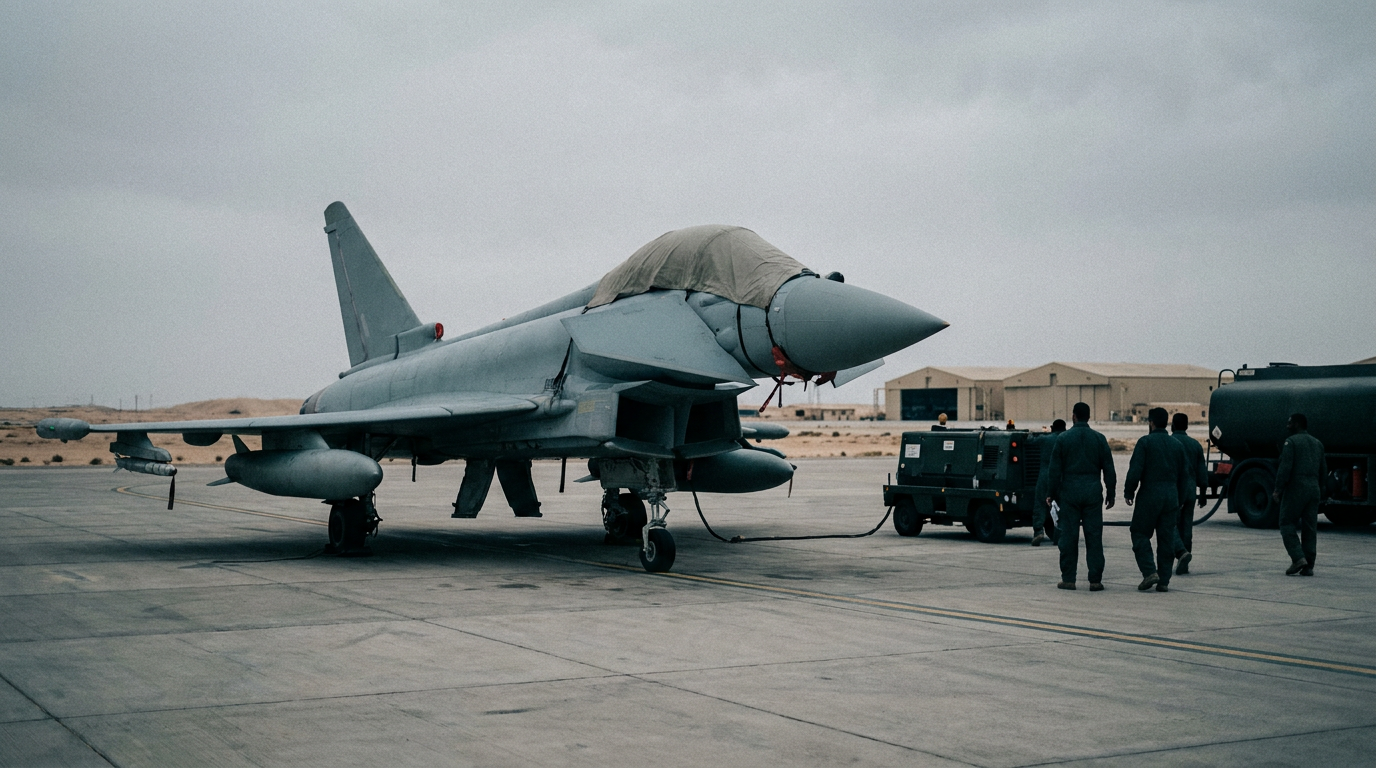
Britain is sending Royal Air Force Typhoon fighters to protect Saudi Arabia against Houthi missiles and drones, expanding its military involvement after attacks on airports, cities and coastal energy installations. Prime Minister Andy Burnham authorised the deployment, which will put British pilots on interception missions over the kingdom.
Defence Secretary Wes Streeting set out the decision in a written statement on Tuesday. The aircraft will help protect people and essential infrastructure within Saudi Arabia. Their assignment excludes attacks on Houthi positions: the Ministry of Defence has restricted the operation to defending against incoming aerial threats.
The announcement follows a missile attack on King Khalid International Airport in Riyadh on 10 October that killed 13 people and injured 308. It was Saudi Arabia’s deadliest attack in more than ten years, bringing the escalating conflict directly to the capital’s main international aviation gateway.
Saudi authorities said last week that attacks on the kingdom’s airports had killed 19 people. Riyadh’s airport was hit again on Monday, when one person died and 11 were injured. Schools across the capital have also closed their classrooms and switched to remote teaching as the attacks have intensified.
The violence extends beyond Saudi territory. Earlier this week, a Houthi missile attack killed more than 70 security personnel at a camp in Yemen’s central Shabwa province. A spokesman for the Saudi-backed Yemeni armed forces said three ballistic missiles struck al-Alam camp, near the city of Ataq.
The Houthi-run health ministry in north-western Yemen has put casualties from Saudi air and artillery attacks since 3 September at at least 141 dead and 395 injured. Separately, the internationally recognised Yemeni government’s health ministry said last week that the conflict had killed at least 1,282 people across Yemen since 6 August.
The background
The Houthis, who receive backing from Iran, have been fighting Yemen’s internationally recognised government for years. They forced that government out of the capital, Sanaa, in 2014. Saudi Arabia supports the displaced administration, placing the kingdom on the opposing side of Yemen’s civil war.
A Houthi offensive that began in September has developed into a wider confrontation involving repeated attacks across the Saudi border. The group has retaliated for strikes on areas under its control in western Yemen, including Sanaa, while directing missiles and drones towards Saudi targets.
Oil infrastructure is part of that campaign. The Houthis are seeking to disrupt Saudi oil exports, alongside their attacks on airports. That combination threatens both the movement of people and the energy facilities on which a major part of Saudi Arabia’s economy depends.
Britain’s defence relationship with the kingdom predates the latest fighting. BAE Systems supplied Saudi Arabia with 72 Typhoon aircraft under an agreement originally valued at £4.4bn. Saudi interest in purchasing another 48 fighters has led to negotiations stretching over several years.
The RAF has also recently carried out comparable interception work elsewhere in the region. During the spring and summer, Typhoons operating from Akrotiri in Cyprus and from Qatar flew missions against missiles and drones launched by Iran and allied groups towards Gulf states. Britain’s wider role in the US-Israel war against Iran was limited.
British aircraft have previously attacked the Houthis directly. Last year, RAF Typhoons struck buildings at military facilities used to manufacture attack drones about 15 miles from Sanaa. The newly announced Saudi deployment has a different remit, separating the interception of incoming weapons from strikes against the sites producing or launching them.
The group’s activities have also affected sea transport. Since November 2023, Houthi attacks on commercial vessels in the Red Sea have reduced shipping in the area by 55%, with losses running into billions of pounds. That campaign has given the conflict consequences beyond the countries taking part in the fighting.
What people are saying
Streeting presented the deployment as a response to an escalation that endangered civilians. He singled out the targeting of Riyadh’s airport as evidence of the Houthis’ willingness to intensify the confrontation, and said the additional British support would help Saudi Arabia counter the threat.
Downing Street has framed the decision around Britain’s economic and security interests. It maintains that protecting Saudi Arabia does not mean Britain is being drawn into the wider conflict. That position accompanies the government’s explicit distinction between air defence over the kingdom and offensive military action in Yemen.
The Houthis have signalled their intention to keep attacking. Earlier this month, their military spokesman, Brigadier General Yahya Saree, pledged to intensify operations well inside Saudi territory. In its account of the Shabwa camp attack, the group described its targets as concentrations of Saudi enemy forces.
US President Donald Trump has raised the possibility of American involvement in a counter-attack after Saudi Arabia promised retaliation. His remarks added a separate prospect of US action to the response now being organised by Britain, whose announced fighter mission remains defensive.
What happens next
The British package includes military advisers and an RAF Atlas A400M transport aircraft as well as the Typhoons. The transport aircraft will help move defence equipment around Saudi Arabia, providing a logistical role alongside the fighters’ task of engaging airborne threats.
Existing British assistance will continue. An RAF Voyager has been supporting defensive Saudi operations through air-to-air refuelling, and that commitment has been extended by 90 days. Refuelling allows aircraft to take on fuel in flight rather than returning to an airfield each time they need to replenish it.
Britain is already supplying equipment intended to protect Saudi Arabia against aerial attack, and British military advisers are already stationed in the country. The additional personnel and aircraft therefore expand an established support operation rather than create a wholly new defence relationship.
The decision also follows direct talks between London and Washington. A few days before the announcement, Streeting visited US Defence Secretary Pete Hegseth at the Pentagon, where their discussions included the response to the Houthi escalation. Burnham had announced British refuelling assistance for aircraft countering Houthi weapons in September.
Why this matters
For UK households and businesses, the government’s stated concern extends to energy costs. Streeting has linked violence in the Gulf to disruption of energy supplies and higher costs for consumers and companies. Ministers are therefore presenting the protection of Saudi infrastructure as an economic interest as well as a military commitment.
For British nationals travelling through the region, the immediate practical issue is airport safety. UK travel advice tells them to avoid King Khalid International Airport in Riyadh until it is secure. That warning applies to a major international transport hub repeatedly targeted during the escalation.
Reporting that informed this story
- BBC News: UK to deploy jets to defend Saudi Arabia from Houthi attacks
- The Guardian Politics: UK to deploy fighter jets to protect Saudi Arabia from Houthi attacks
- Daily Mail: RAF fighter jets set to be used to defend Saudi Arabia from Houthi aerial attacks
This article was written independently by The Daily Times from publicly available facts and headlines. No text has been copied from the outlets above.