Brighton sisters died by suicide, coroner concludes
An inquest has concluded that three sisters from west London took their own lives in Brighton in May, 16 years after their mother’s death.

By Robert Aldridge, Senior Reporter
Published 8 Oct 2026, 13:01
What happened
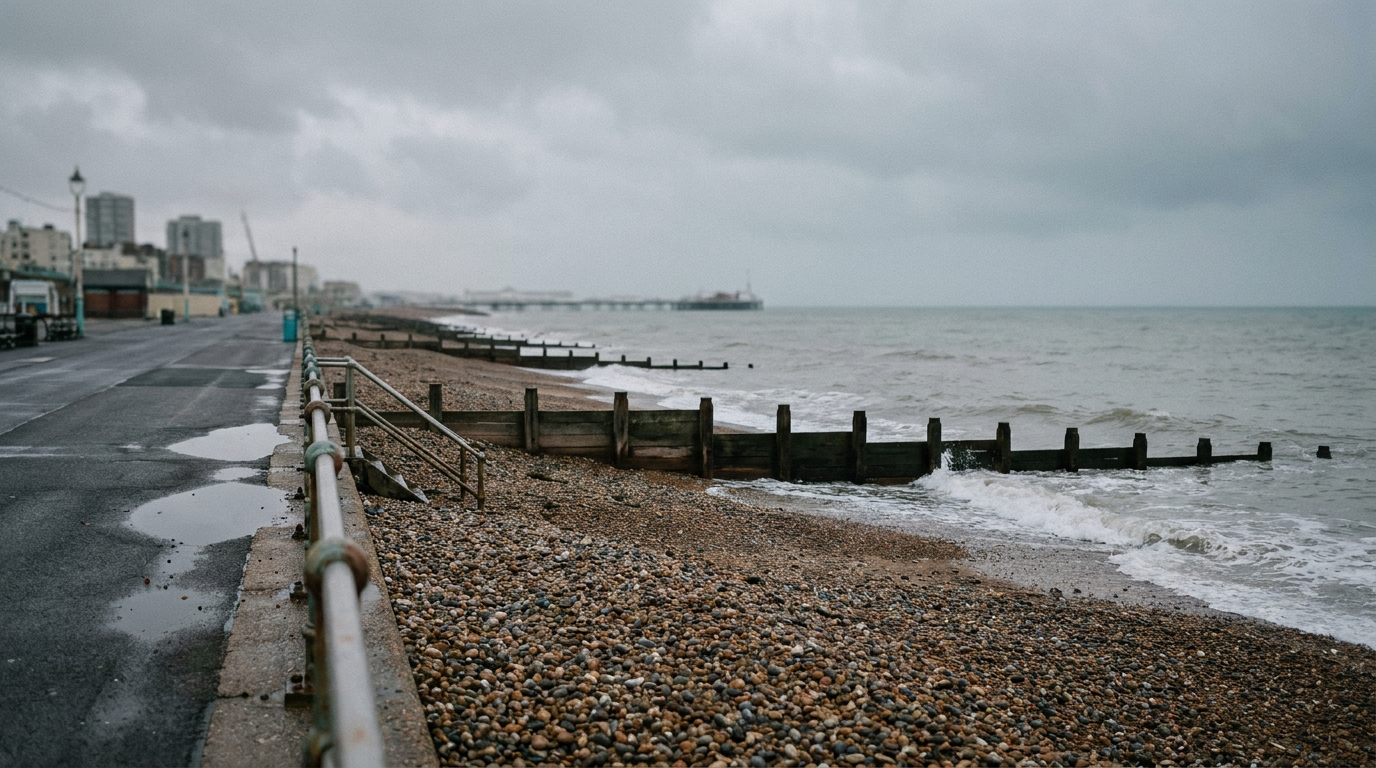
A coroner has concluded that three sisters whose bodies were recovered from the sea in Brighton on 13 May made a joint decision to take their own lives. Their deaths followed a visit to Birmingham, where their mother had lived before her death in 2010.
Jane Adetoro, 36, Christina Walters, 32, and Rebecca Walters, 31, shared a home in Greenford, west London. Senior coroner Penelope Schofield delivered her findings at Woodvale Coroner’s Court in Brighton on Thursday, 8 October 2026, after hearing evidence about their journeys, medical histories and the police investigation.
Police and the coastguard were alerted at about 5.45am on the morning the women died, following reports of someone in difficulty in the water. The emergency response subsequently involved the Royal National Lifeboat Institution, whose crew recovered Jane and Christina. Rebecca was recovered from the shoreline.
Paramedics pronounced all three women dead at the scene. The hearing was told that the weather was windy and conditions at sea were rough. None of the sisters could swim.
Post-mortem examinations established drowning as the medical cause of each death. Toxicology tests detected neither drugs nor alcohol, and investigators found no indication that the women had suffered violence.
Detective Chief Inspector Mark Cullimore, of Sussex Police, presented evidence tracing their movements before they died. Taxi journeys and CCTV helped investigators reconstruct their travel from London to Birmingham, back to their shared home and then to the Sussex coast.
The background
The sisters’ mother, Janice Adetoro, died in Birmingham in 2010. An earlier inquest established that she had drowned. Her death was part of the family history considered at the hearing into her daughters’ deaths, which occurred 16 years later.
On 11 May, the women travelled together by taxi to Erdington, Birmingham. They visited the area around their mother’s former home, close to the place where she had died, before arranging their return journey to London in the early hours of 12 May.
Later on 12 May, they took another taxi, booked in advance, to Brighton. They arrived near the seafront that evening. CCTV subsequently recorded them in the area during the night before the emergency services were called.
The court heard that Christina had experienced anxiety and depression following her mother’s death. Her father had contacted her GP about those difficulties. The surgery sent her a letter, but she did not subsequently contact the practice or mental health services.
The medical evidence differed for each sister. Rebecca’s records contained no comparable concerns, while Jane was not registered with a GP. Those distinctions formed part of the evidence rather than establishing a single medical explanation for the deaths of all three women.
Police also examined Christina’s laptop and identified suicide-related searches. That digital evidence was considered alongside the medical findings and the reconstruction of the sisters’ movements, giving the court several separate strands of information on which to base its conclusions.
How an inquest works
An inquest is a judicial investigation into a death, rather than a criminal trial. In England and Wales, coroners investigate deaths that are violent or unnatural, deaths whose cause is unknown, and deaths occurring in custody or other forms of state detention.
The central questions concern who died and how, when and where the death occurred. A hearing can bring together evidence from police officers, doctors, witnesses and relatives. Its purpose is to establish the circumstances of a death, not to determine whether someone should be convicted of an offence.
The medical cause of death and the coroner’s conclusion serve different purposes. A post-mortem examination may establish the physical cause, while the inquest considers the wider circumstances. In this case, the medical finding was drowning and the coroner’s conclusion was suicide.
For a suicide conclusion, the coroner must be satisfied that the person acted deliberately to end their life. The applicable standard is the balance of probabilities: whether that explanation is more likely than not. It is not the criminal standard of proof beyond reasonable doubt.
An inquest does not have to establish a complete account of a person’s thoughts or identify one reason for their actions. Evidence can support a conclusion about intention while leaving personal motivations unresolved. A finding of suicide therefore does not, by itself, explain everything that preceded a death.
Relatives have a recognised role in the coronial process. Close family members can participate as interested persons, receive relevant information and ask questions within the scope of the hearing. Their evidence may also help the court understand the person’s life beyond the circumstances being investigated.
What people are saying
The sisters’ father, Joseph Jacobson, followed the hearing by video link, as did other family members. A statement read on his behalf described his grief at losing all three daughters and his difficulty understanding how their lives had ended so abruptly.
He recalled seeing them develop from childhood into intelligent adults, with each daughter holding a distinct place in his affections. He also described the closeness between the sisters. His tribute focused on their lives and his continuing love for them.
Christian faith was an important part of his response to the loss. He expressed the hope that his daughters were with their mother in God’s care, and described the memories he would carry with him.
Schofield described the women as intensely private and socially secluded. She said the court could not explain why they had made this decision or why they had travelled to Brighton, and stressed that speculation could not provide those answers.
What happens next
The conclusions delivered on Thursday complete the court’s determination of the circumstances of the three deaths. In the normal coronial process, the formal record identifies the deceased, records the medical cause and sets out the conclusion reached after consideration of the evidence.
After an inquest, the coroner sends the information needed for death registration to the registrar. Families can then obtain the relevant death certificates. These documents have practical uses in administering an estate and dealing with organisations that require formal confirmation of a death.
A separate part of a coroner’s role concerns preventing future deaths. Where evidence reveals a continuing risk that requires action, a coroner must raise it with the relevant person or organisation through a prevention of future deaths report. That process is distinct from the conclusion about how someone died.
Why this matters
For families across the UK, bereavement after suicide can involve both grief and difficult practical responsibilities. Specialist bereavement support is different from an inquest: it offers help with living after a loss, rather than a legal determination of the circumstances surrounding it.
Anyone experiencing emotional distress, or needing someone to listen, can contact Samaritans free on 116 123 in the UK and Ireland. The service is available to people struggling with their feelings as well as those experiencing suicidal thoughts.
Reporting that informed this story
- Daily Mail: Three sisters who drowned at Brighton beach died in suicide pact after visiting place where their mother took her own life 16 years earlier, inquest finds
- The Guardian UK: Three sisters who drowned in Brighton took their own lives, inquest finds
- BBC News: Three sisters who drowned in sea off Brighton took own lives, inquest finds
This article was written independently by The Daily Times from publicly available facts and headlines. No text has been copied from the outlets above.