Noah Woods inquest hears how toddler left Brantham playground
The three-year-old passed through a fence opening and a garden gate before disappearing from view, an inquest in Suffolk has heard.
By Marcus Odell, Political Correspondent
Published 25 Sept 2026, 13:00
What happened
CCTV and a relative’s account have helped police establish the route three-year-old Noah Woods took away from a Suffolk playground before a search ended with the discovery of his body in a pond.
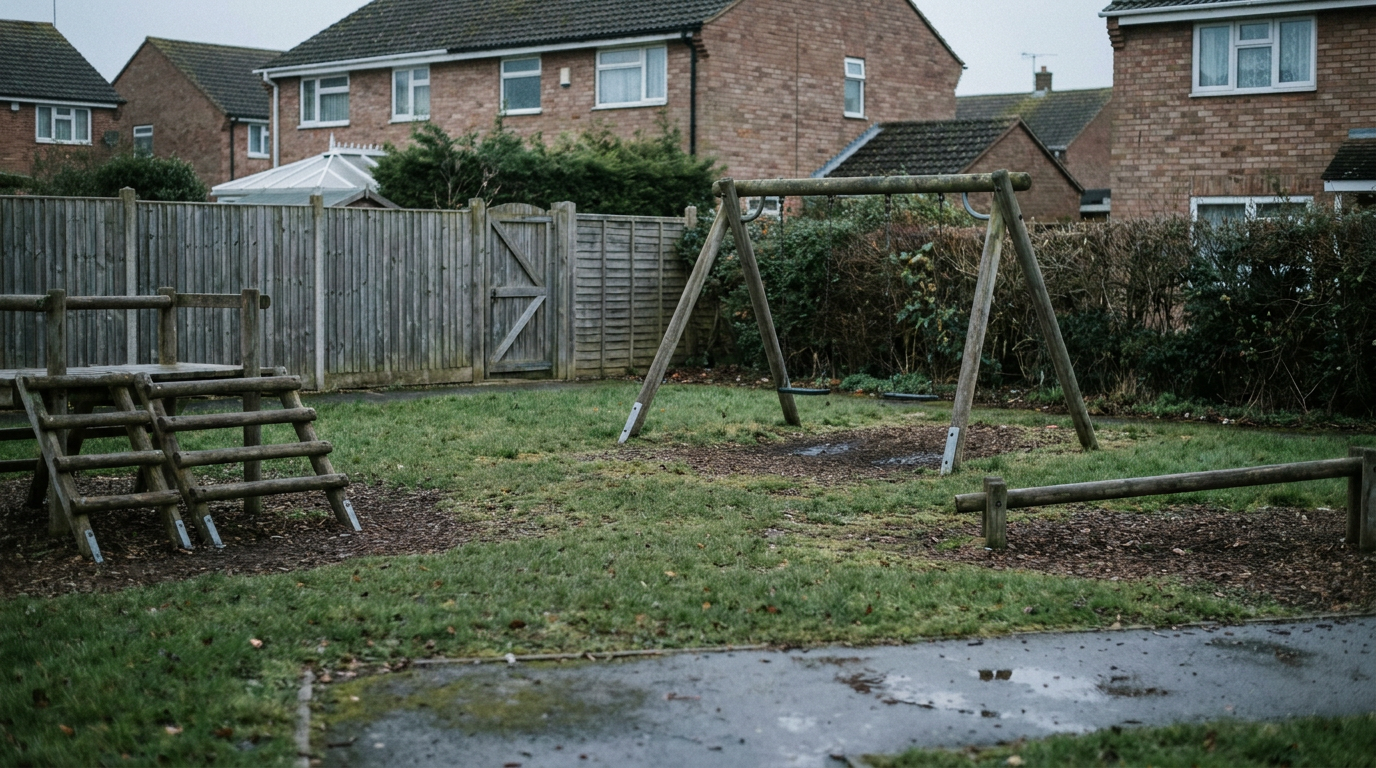
An inquest opened in Ipswich on Friday heard that Noah passed through an opening in fencing between the play area and a memorial garden. He then went through an open garden gate and towards Decoy Pond in Brantham.
Noah, who lived in nearby East Bergholt, had been visiting the playground at Merriam Close with a relative on the afternoon of 15 September. Detective Chief Inspector Matthew Connick, of Suffolk Police, told the hearing that the visit formed part of his usual routine.
The court heard that the first CCTV recording showed Noah at 2.13pm. The last recording of him playing was at 2.37pm. Connick explained that movement triggered the camera, meaning its recordings were separate sequences rather than an uninterrupted record of the visit.
After leaving the garden, Noah ran along a path through a new housing estate. His relative followed close behind and called to him while trying to catch up. After about 200 metres, Noah was no longer in sight.
A second man helped look for him before police were contacted. The relative, whose name was not given during the hearing, subsequently provided officers with a statement about what had happened.
Assistant coroner Jyoti Gill opened the proceedings at Suffolk Coroner’s Court and then adjourned them. The hearing lasted six minutes, and Noah’s family did not attend.
The search and recovery
Around 1,300 people joined the effort to find Noah over the following 24 hours. Members of the public searched alongside emergency services, with helicopters and dog units deployed around the village, near the River Stour and the boundary between Suffolk and Essex.
On 16 September, Metropolitan Police divers searched Decoy Pond, close to the area where Noah had last been seen. A diver found him among tree roots beneath the surface, approximately five metres out from the bank. The water there was estimated to be 1.8 metres deep.
Paramedics confirmed his death at 4.31pm BST. That evening, his mother, Charlie Peck, formally identified him at Ipswich Hospital. Police are not treating the death as suspicious.
A post-mortem examination took place at Addenbrooke’s Hospital in Cambridge. The medical cause of death remains subject to further investigation; the opening hearing did not determine how Noah died.
The background
The playground was intended for children aged under five. Brantham Parish Council, which maintains it, has drawn a distinction between the fence dividing the play space from the memorial garden and the fencing around the wider Merriam Close site.
The council said the internal fence was being built to separate those two spaces and acknowledged a break in it. It said perimeter fencing enclosed the combined grounds. Its statement therefore addressed both the division within the site and the boundary around it, rather than describing them as one fence.
For Noah and his family, trips to the park were a longstanding weekly arrangement. Their tribute explained that he had spent Tuesdays there with a much-loved relative since he was born. They enjoyed games of chase, running and trying the play equipment together.
Noah was undergoing an autism assessment but had not been diagnosed. His family said he had mild hearing loss and delayed speech. They described recent progress in his language, with new words becoming part of his everyday life.
He lived with his mother, father and baby brother. The family’s account placed those close relationships at the heart of his childhood and described the pleasure he took in playing and making others laugh.
What people are saying
Charlie Peck has appealed to other parents to value the time they have with their children. In the family tribute, her message focused on affection, shared experiences and the importance of everyday memories, rather than on the circumstances being examined by the coroner.
Noah’s father, Rhys Woods, also remembered his son in a message shared with a community Facebook group the previous week. He emphasised Noah’s gentle nature and the love he gave his family, and expressed the depth of their loss.
The public response extended beyond the village. Players wore black armbands in Noah’s memory during Everton’s home fixture against Ipswich Town on Saturday, bringing a tribute to him into the football ground.
Brantham Parish Council expressed sympathy for Noah’s relatives and everyone affected by his death. It committed to assisting the investigation and said it would refrain from further comment while inquiries continued. That commitment accompanied its explanation of the playground fencing.
At the start of the inquest, Gill offered condolences to Noah’s family, friends and the wider circle of people affected. She returned to that expression of sympathy when closing the short hearing, before the case was adjourned for further work.
What happens next
No date has been fixed for the full inquest. The outstanding medical investigation forms part of the work still to be completed before the circumstances of Noah’s death can be considered at a substantive hearing.
In England and Wales, an inquest is a coroner’s fact-finding inquiry. Its purpose is to establish the identity of the person who died and how, when and where the death occurred. It is not a criminal trial and does not decide civil liability.
Opening an inquest and adjourning it allows that legal process to begin while evidence is gathered. A later hearing can examine witness accounts, medical findings and other relevant material before the coroner reaches a conclusion.
Evidence given at an opening hearing is therefore distinct from a final determination. In this case, the description of Noah’s movements was presented by a police officer; the coroner’s eventual conclusion will follow consideration of the evidence through the inquest process.
Coroners also have a separate power to raise concerns about risks to other lives. Where an investigation reveals circumstances creating a risk of future deaths, and action should be taken, a coroner must issue a prevention of future deaths report to an appropriate person or organisation. This is a general safeguard within the system, not an automatic result of every inquest.
Why this matters
For families using public play spaces, the case brings attention to the different functions of internal barriers, perimeter fencing and gates. A division between two areas within a site is not the same as its outer boundary, a distinction relevant to understanding the layout described at the hearing.
For the community, the inquest provides a public process for examining a death that prompted a substantial search. Any formal prevention report arising from that process would require its recipient to respond, normally within 56 days, explaining action taken or proposed, or why no action is planned.
Reporting that informed this story
- BBC News: Noah Woods left playground through gap in fence, inquest hears
- The Guardian UK: Noah Woods, three, died after leaving playground through gap in fence, inquest told
This article was written independently by The Daily Times from publicly available facts and headlines. No text has been copied from the outlets above.