Prison releases begin as Burnham faces warnings over supervision
About 700 prisoners are expected to leave jails in England and Wales on Thursday, as victims’ groups and MPs raise concerns over safety and support.

By Marcus Odell, Political Correspondent
Published 1 Oct 2026, 13:01
What happened
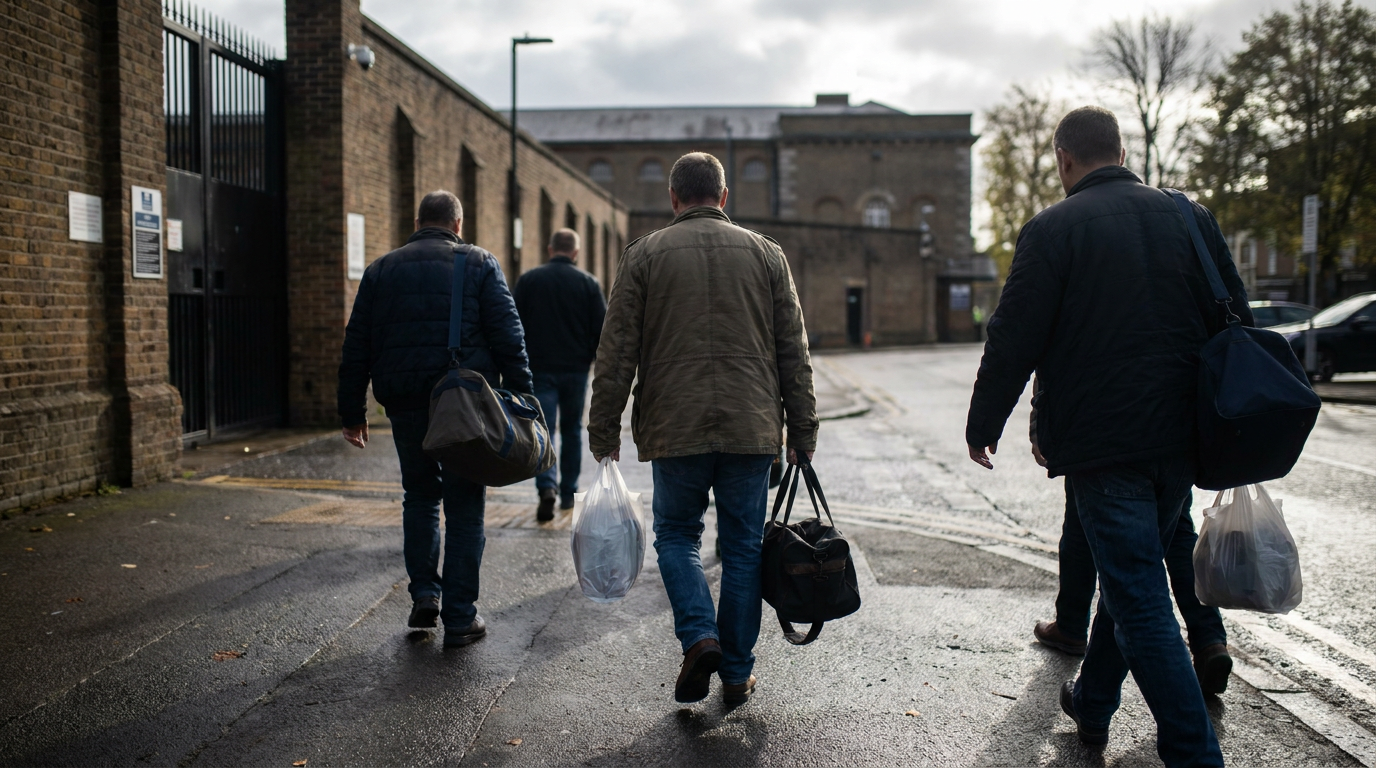
Prisons across England and Wales began releasing inmates early on Thursday 1 October, with about 700 people expected to leave custody during the day as the government seeks to relieve pressure on cells.
The releases involve dozens of establishments. Prisoners were seen leaving HMP Brixton in London, HMP Bristol in Horfield and HMP Durham in north-east England, with some celebrating outside the gates.
Prime Minister Andy Burnham received messages of thanks from men leaving Durham and HMP Cardiff. Journalists gathered outside prisons asked departing inmates what they wanted to say to him about the policy.
The first day forms part of a programme intended to release about 2,000 offenders over the next month, followed by another 3,000 in stages over the next year. Those being freed include people convicted of domestic abuse and violent offences.
Burnham intervened to reduce the planned total from 6,000 to 5,000. People convicted of manslaughter are excluded, meaning the men responsible for killing PC Andrew Harper, who died on duty in 2019, will not qualify.
The background
The prison population has grown substantially in the months leading up to the releases. Ministry of Justice figures put the total for England and Wales at 87,499 on Monday, compared with 85,761 on 29 June.
That represents an increase of 1,738 people, or 2%, in roughly three months. Downing Street says adult male prisons are operating at 98% of capacity, leaving little room to absorb further demand.
The Labour government says fewer than 100 prison spaces remained when it took office in summer 2024. It attributes the pressure to inadequate investment, saying the estate gained only 500 places on a net basis over a decade.
Burnham inherited the early-release policy from former prime minister Keir Starmer. He subsequently restricted its scope following criticism from MPs, victims, campaigners and prison officers working on the frontline. Previous Conservative governments also used early releases to manage pressure on prisons.
In October 2024, a release outside HMP Swaleside on the Isle of Sheppey in Kent drew attention when Daniel Dowling-Brooks publicly praised Starmer. Friends, his mother and his sister arrived to collect him in a white Bentley and a black Mercedes G-Wagon.
Dowling-Brooks, then 29, said he had spent seven years in custody for kidnapping and causing grievous bodily harm to someone who owed his friend money. His release came seven weeks earlier than scheduled.
He expressed regret for the offence and said he wanted to spend more time with his two children. His stated plans included going to his hostel and complying with the rules governing his release.
Accommodation after prison
For those leaving custody now, finding somewhere to live is an immediate concern. Prisoners are supposed to have suitable accommodation arranged before departure, an important part of reducing the likelihood that they will offend again.
Probation staff in some towns and cities are struggling to secure hostel beds. One probation worker described local accommodation for former prisoners as already full, raising the prospect of some people being released directly into homelessness.
One man who did have accommodation arranged was Michael Bogle, a 38-year-old former bus driver from Brent in north London. He left HMP Wandsworth on Thursday with a place at a bail hostel in south-east London.
Bogle had spent 78 days in prison after breaching a suspended sentence of 32 weeks for shoplifting. He said he had been imprisoned on five occasions and had accumulated 100 convictions.
He linked his shoplifting to becoming homeless and needing food. Describing drug problems inside prison, he also acknowledged the possibility that he might steal again, although he hoped to avoid doing so.
Enver Solomon, chief executive of the social justice charity Nacro, warned that homelessness after release could lead people back into custody. He called for prisons, probation services, councils and community organisations to coordinate efforts to secure housing.
What people are saying
The Ministry of Justice says the arrangements for supervising released offenders will be more stringent than any previously used in Britain. That assurance is central to the government’s defence of releasing prisoners before their expected departure dates.
Claire Waxman, the victims’ commissioner, challenged the gap between ministers’ confidence and conditions facing those responsible for implementing the policy. She said the situation on the ground did not yet justify the government’s level of assurance.
Catherine Atkinson, the Labour MP for Derby North and chair of the Commons justice committee, described the releases as an unwelcome necessity. She attributed the decision to more than a decade of failures to address the prison estate’s capacity problems.
Atkinson also questioned whether probation and prison staff could manage the additional demands. Her concerns included the reliability of electronic monitoring and preparations for offenders returning to communities over the coming months, with public and victim safety her priority.
Justice Secretary Alex Norris acknowledged the anxiety felt by victims approaching an offender’s release date. He argued that an inability to imprison dangerous offenders because cells were full would pose a greater threat to their safety.
Katie Kempen, chief executive of Victim Support, said scenes of prisoners leaving custody would be distressing for victims already fearful about early release. She criticised the burden placed on victims by the justice system’s problems.
What happens next
The government is planning to create 14,000 prison places. Norris presented that expansion, alongside stronger controls on offenders outside custody, as the means of preventing a repeat of the shortage that prompted the releases.
The release programme coincided with Norris being sworn in as lord chancellor at the Royal Courts of Justice in central London. At the ceremony marking the opening of the legal year, he pledged to senior judges that reducing the court backlog would be a priority.
Victim Support launched a dedicated Offender Release Helpline on Thursday. Anyone affected by, or concerned about, a change to an offender’s release date can call freephone 0808 168 9280 for independent specialist support.
The charity says trained advisers will listen to callers, offer practical guidance on safety and wellbeing, and explain next steps. The service is intended to help people dealing with the impact of release decisions as the programme proceeds.
Why this matters
The practical task extends beyond freeing cells: prisons must prepare departures while probation services organise supervision and accommodation in communities across England and Wales. Pressure on hostel places means the housing element is already proving difficult in some areas.
For victims, a change in release date can bring forward concerns about personal safety and the support they need. For those leaving prison, stable accommodation can reduce the risk of further offending, linking successful resettlement directly to protection for the wider public.
Reporting that informed this story
- The Guardian Politics: ‘Thank you Andy Burnham’: prisoners react as they begin to leave under early release scheme – UK politics live
- The Guardian Politics: Prisoners thank Andy Burnham as they leave jail in first wave of early releases
This article was written independently by The Daily Times from publicly available facts and headlines. No text has been copied from the outlets above.