Eiffel Tower chief to leave after women excluded during group visit
Patrick Branco Ruivo will leave at the end of the year after female staff were moved aside for a Hindu delegation, prompting a strike and investigations.

By Robert Aldridge, Senior Reporter
Published 29 Sept 2026, 18:01
What happened
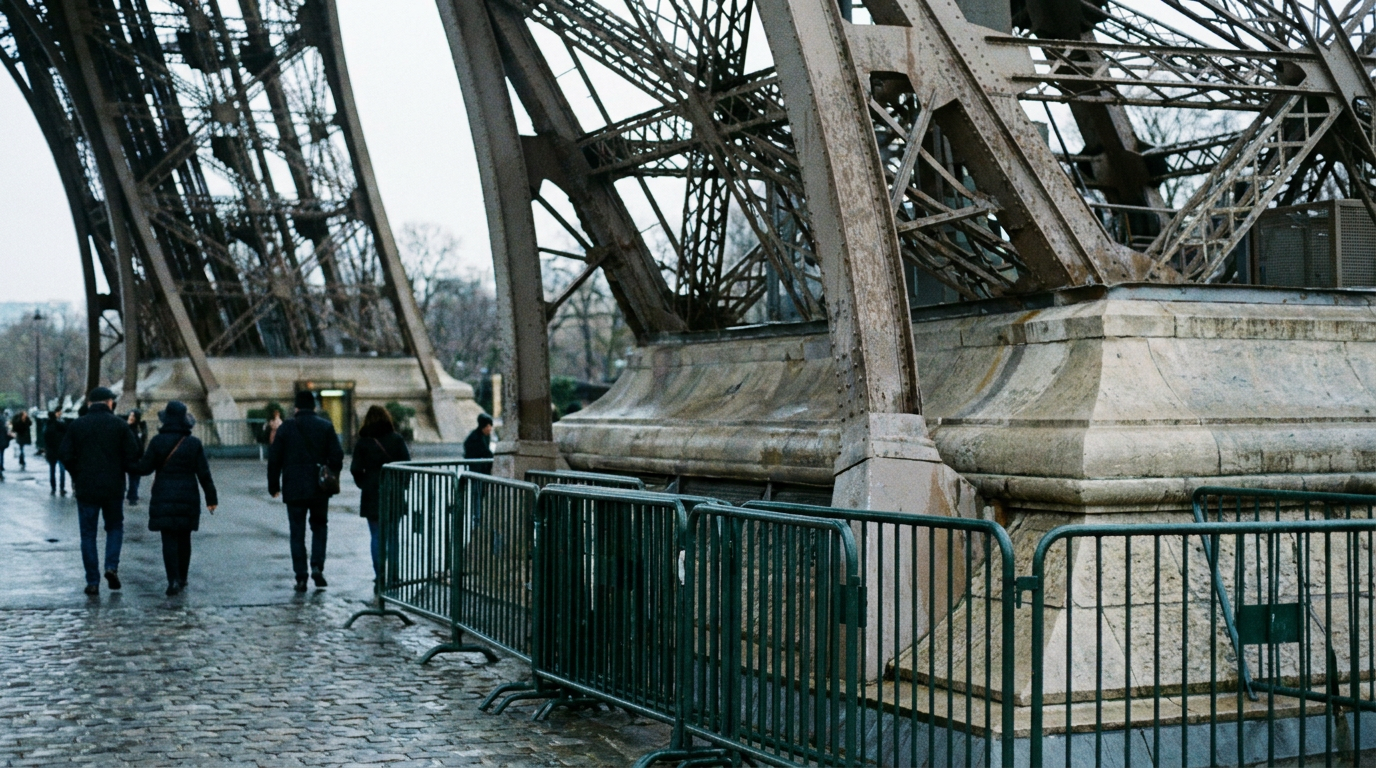
The exclusion of women from their normal duties at the Eiffel Tower has led to a change at the top of its operating company. Patrick Branco Ruivo will leave his leadership post at the end of the year following an internal investigation into arrangements made for a visiting Hindu religious delegation.
The Eiffel Tower Operating Company, known as SETE, announced the departure on Tuesday. Its inquiry identified failures both in preparations for official visits generally and in the handling of the delegation’s visit on 5 September. The company rejected the treatment of its female employees as unacceptable.
Around 100 people associated with Bochasanwasi Akshar Purushottam Swaminarayan Sanstha, or BAPS, attended the Paris landmark. Before their arrival, the group had asked for arrangements that would reduce contact with women. SETE has acknowledged that accepting that request was wrong.
The consequences extended beyond changes to the staff roster. Employees described women being removed from their posts and directed to wait in separate rooms. Men took over some of their duties, while female workers were also told to avoid particular routes and areas for the duration of the delegation’s presence.
Employees subsequently held a one-day strike, closing the monument. Their protest concerned management decisions about who could remain at work in public-facing areas, turning the arrangements for a single group visit into a dispute that also interrupted access for other visitors.
The background
Branco Ruivo’s departure will end a tenure that began in November 2018, when he became SETE’s director general. Before taking charge of the tower’s operating company, he had advised Anne Hidalgo, the former mayor of Paris, on the modernisation of public services.
His career also included study at the École Nationale d’Administration, the institution that trained generations of senior French officials and political figures before its closure. The role at the tower placed him in charge of operating one of the capital’s most prominent visitor attractions.
Paris city hall oversees the tower’s operation, giving the dispute a municipal dimension as well as a workplace one. The city apologised over the failure to uphold the French republic’s principle of equality, recognising that the treatment of employees involved responsibilities beyond accommodating a visiting party.
Emmanuel Gregoire, the Socialist mayor of Paris, ordered two separate investigations after the incident. Those inquiries formed part of the official response alongside the company’s own examination of the visit. The controversy therefore drew scrutiny from both the employer and the city authority responsible for oversight.
The religious visit
The tower visit took place during a weekend of celebrations for the inauguration of BAPS’s first traditional temple in France. That temple is at Bussy-Saint-Georges, east of Paris, linking the delegation’s trip to a new religious centre outside the capital rather than to the monument alone.
BAPS explained that several monks were travelling with the party and that their religious commitments lay behind the request concerning women. Among them was its spiritual leader, Mahant Swami Maharaj, aged 93, whose vows prohibit contact with women, according to the group.
The movement maintains separation between men and women in its religious activities, including arrangements within temples and the entrances used to reach them. Those practices provide the background to the delegation’s request, which tower management then accommodated through restrictions affecting employees at their workplace.
BAPS traces its beliefs to Lord Swaminarayan, a celibate ascetic from the late 18th century. His followers regard him as an incarnation of Vishnu, the Hindu deity associated with preservation. The movement’s approach to relations between men and women is rooted in that religious tradition.
Its presence extends well beyond France: BAPS has temples in cities including London, Los Angeles and Sydney. It presents itself as a fellowship sustained by volunteers, with Hindu principles guiding work intended to benefit society. The French inauguration was thus an event within an international religious network.
What people are saying
For employees, the central objection was that their sex had determined whether they could carry out their normal work. In their collective response, staff challenged an approach that removed women from view and allowed male colleagues to take their places, describing it as incompatible with equal treatment and freedom from discrimination.
A union representative described the personal impact on the women involved, saying they had experienced humiliation after being required to leave their workstations. That response concerned not simply where people were assigned, but how the instructions affected employees who were already present to do their jobs.
Workers also linked their protest to the tower’s national significance. They argued that a monument representing France should demonstrate the same standards in its treatment of staff as in the values it presents publicly. Their criticism placed employment practices at the centre of the tower’s institutional responsibilities.
Yaël Braun-Pivet, president of France’s National Assembly, opposed requiring women to withdraw to satisfy the wishes of overseas visitors. Her intervention brought condemnation from the leadership of the national legislature, alongside the objections already raised by employees and the Paris authorities.
BAPS apologised for the hurt and disruption associated with the incident and emphasised mutual respect and service as guiding principles. The group also defends separation between the sexes as a practice intended to benefit women. Critics, by contrast, regard religiously justified exclusion of women as discriminatory and incompatible with contemporary expectations of equality.
What happens next
SETE chair Ariel Weil said on Tuesday that he had asked for gender-equality measures and training programmes to be introduced. This adds a workplace response to the leadership change: the company is addressing how employees are treated as well as who will lead the organisation.
Weil also set out a transition period over the coming months, with Branco Ruivo remaining due to leave at year-end. The timetable allows preparation for the handover rather than an immediate departure, while placing responsibility for the change with the company’s leadership.
The inquiry’s findings give that work a broader scope than the handling of one delegation. Because it identified shortcomings in the planning of official visits, the organisational response concerns the arrangements through which visitor requests are accepted and translated into instructions for staff, not only the events of 5 September.
Why this matters
For UK travellers, the practical consequence has already been a day when the Eiffel Tower could not admit visitors because of industrial action. The episode shows how a dispute over working conditions at a major attraction can affect access, even when it begins with arrangements for a separate visiting group.
For British readers familiar with BAPS through its London presence, the dispute concerns the meeting point between religious observance and employment at a public landmark. In Paris, accommodating the delegation meant changing women’s duties and movements; the resulting response now encompasses management accountability, staff training and a leadership handover.
Reporting that informed this story
- BBC News: Eiffel Tower chief to quit after female staff replaced by men during religious visit
- The Guardian UK: Eiffel Tower chief to quit after female staff told to stay hidden during Hindu group visit
This article was written independently by The Daily Times from publicly available facts and headlines. No text has been copied from the outlets above.