US orders diplomats out of Saudi Arabia as attacks intensify
Non-emergency US staff and their families must leave Saudi Arabia after attacks on an airport and an oil facility killed at least four people.

By Robert Aldridge, Senior Reporter
Published 22 Oct 2026, 07:01
What happened
The United States has ordered non-emergency government employees and their families to leave Saudi Arabia as fighting with Yemen’s Houthis intensifies. The departure instruction covers the American embassy in Riyadh and US consulates elsewhere in the kingdom, where airports and energy infrastructure have come under repeated attack.
At least four people were killed in two incidents on Wednesday evening, according to casualty figures issued by Saudi authorities. An airport in the east of the country was struck, while debris from an intercepted drone fell at an oil facility in the south-east.
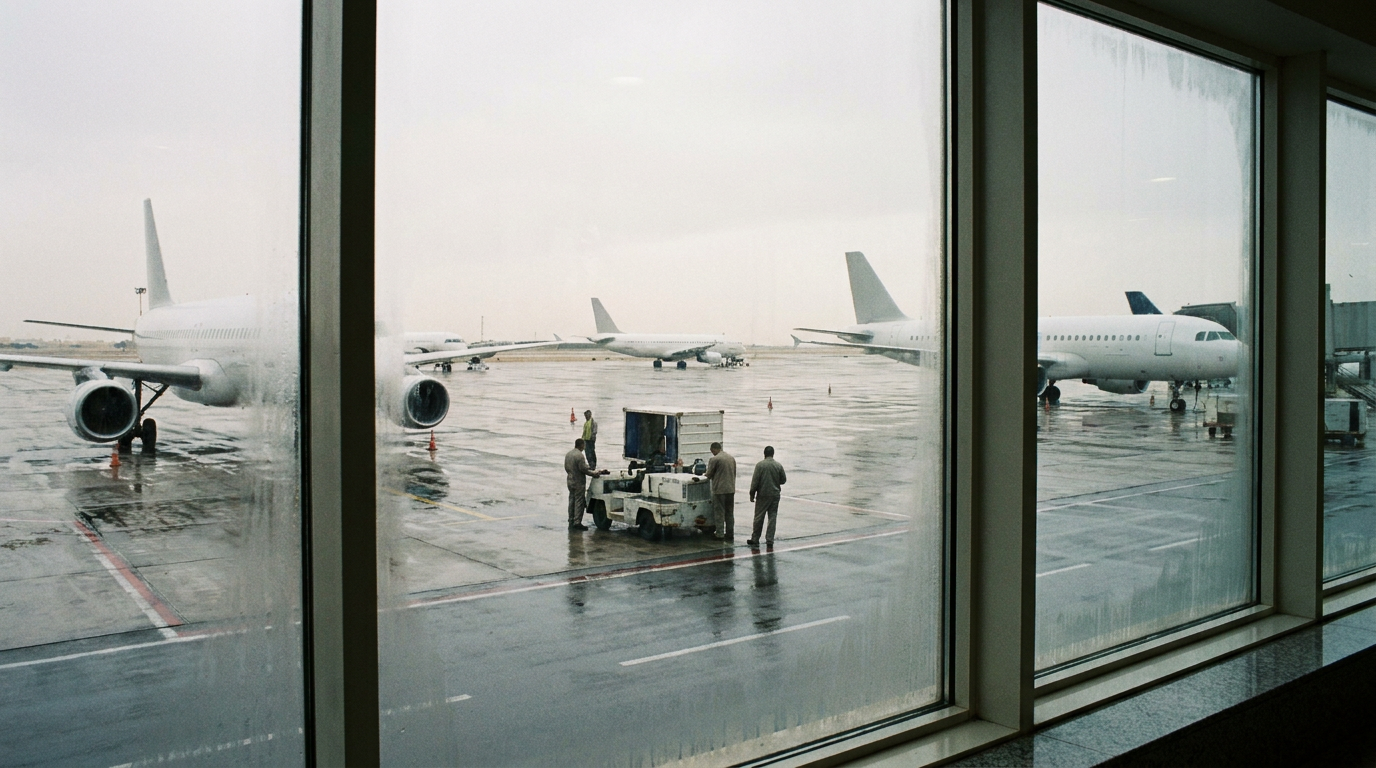
Saudi aviation authorities said on Thursday that two people had died in the attack on King Fahd International Airport in Dammam. Eight others were injured, with injuries ranging in severity, and officials said the airport sustained physical damage.
The airport serves a city on Saudi Arabia’s Gulf coast, near Bahrain and Qatar. Flight-tracking service Flightradar24 recorded aircraft being diverted from Dammam following the attack, adding an immediate disruption to passenger journeys alongside the casualties on the ground.
At the Shaybah oil field, close to Saudi Arabia’s border with the United Arab Emirates, an intercepted drone left two people dead and another two injured. The Saudi energy ministry attributed those casualties to falling debris rather than a direct impact by the aircraft.
Neither incident was immediately claimed by the Houthis. Saudi energy officials did not identify who had sent the drone towards Shaybah. The attacks nevertheless followed weeks in which the Iran-backed group had repeatedly targeted Saudi airports and oil installations with missiles and drones.
The American departure order affects a diplomatic operation already reduced by the wider regional conflict. The embassy in Riyadh was badly damaged early in the US war with Iran and had worked with a small remaining team for months. Some diplomats had only recently returned.
The background
The roots of the confrontation lie in Yemen’s civil war. In 2014, the Houthis displaced the government from the capital, Sanaa. The following year, a military coalition led by Saudi Arabia intervened in an effort to restore the government’s authority, escalating the conflict.
An informal ceasefire subsequently lasted for about four years. It broke down in July, when the Houthis announced restrictions on maritime traffic directed against Saudi Arabia and began attacking Saudi airports, oil facilities and tankers in the Red Sea.
The Houthis presented that campaign as retaliation for what they described as a Saudi blockade of territory under their control. They also cited an air strike on Sanaa airport, which they attributed to Saudi Arabia. Those were the group’s stated reasons for renewing its attacks.
Over the past month, the confrontation has intensified through Saudi strikes and Houthi missile and drone launches. The group’s targets inside the kingdom have included military bases as well as civilian infrastructure, extending the fighting beyond the two countries’ border areas.
A recent attack on Riyadh’s international airport was Saudi Arabia’s deadliest in years. That strike preceded the latest deaths in Dammam and at Shaybah, during a period in which the kingdom has faced attacks on an almost daily basis.
The maritime campaign has also affected the Bab al-Mandab Strait, beside Yemen’s south-western coast. The Houthis’ declared restrictions there have contributed to rising global oil prices, connecting the conflict on land with the movement of Saudi exports by sea.
Saudi Arabia had become reliant on the Red Sea for oil shipments after the US and Israel’s war with Iran effectively closed the Strait of Hormuz in the Gulf. Pressure on the Red Sea route has therefore hit an export channel the kingdom was using as an alternative.
What people are saying
The US State Department linked its decision to increasingly frequent Houthi attacks on civilian airports and other essential infrastructure. It cited deaths and injuries among civilians, together with substantial disruption to travel, as reasons for reducing the number of American government personnel in Saudi Arabia.
Tommy Pigott, a State Department spokesperson, said protecting employees and their families was the department’s overriding concern. The department also warned that the fighting could worsen quickly, making the departure order a precaution against further deterioration as well as a response to attacks already carried out.
Pigott rejected suggestions that the same instruction extended to American diplomatic families in the United Arab Emirates, Jordan, Qatar and Bahrain. His statement on Wednesday confined the order to Saudi Arabia, drawing a distinction between the Saudi withdrawal and arrangements at other US missions in the region.
US Central Command has separately described movements of American service personnel as part of routine efforts to maintain military readiness. That explanation concerns military deployments, rather than the State Department’s instruction to civilian government employees and their dependants.
The Saudi accounts of the latest incidents identified two different causes of casualties: an attack that damaged an operating airport and debris from a drone that had been intercepted. At Shaybah, the successful interception did not prevent deaths and injuries below.
What happens next
The immediate step is the departure of employees designated as non-emergency staff, along with their families. The instruction is not a withdrawal order for every American diplomat: its scope is defined by employees’ duties and applies across the embassy and consular network in Saudi Arabia.
Washington previously instructed non-essential staff to leave the Gulf before the war with Iran began in late February. The latest action returns the focus to diplomatic staffing after a period in which the damaged Riyadh embassy had started bringing some personnel back.
The regional diplomatic calendar also includes the US midterm elections on 3 November. President Donald Trump has publicly said he does not intend to restart the war with Iran before that vote, setting out his position on the timing of any renewed American campaign.
Last week, Trump said the US was considering action against Pickaxe Mountain, a site associated with Iran’s nuclear programme. US defence secretary Peter Hegseth travelled to Israel earlier this week for meetings with Prime Minister Benjamin Netanyahu, placing discussions between the two allies alongside the escalating Saudi-Houthi confrontation.
Why this matters
For UK passengers travelling through Saudi Arabia, the practical consequences include diversions when airports are attacked. The American order concerns US government employees and families, not British travellers; it is a diplomatic staffing decision rather than an instruction governing UK journeys.
For the wider UK economy, the relevant connection is energy: disruption around Saudi export routes has already contributed to higher global oil prices. The pressure comes from two shipping corridors, with restrictions near Yemen compounding the effective closure of the Gulf route through Hormuz.
Reporting that informed this story
- BBC News: US orders some diplomats to leave Saudi Arabia as Houthi attacks escalate
- The Guardian UK: Some US diplomats told to leave Saudi Arabia amid Houthi attacks
This article was written independently by The Daily Times from publicly available facts and headlines. No text has been copied from the outlets above.