Pope Leo XIV to undergo surgery to remove lung nodule
The 71-year-old Pope will have surgery in Rome early in the week, with recovery expected to take about seven days and a November visit to South America still planned.
By James Reeve, Foreign Affairs Writer
Published 11 Oct 2026, 13:00
What happened
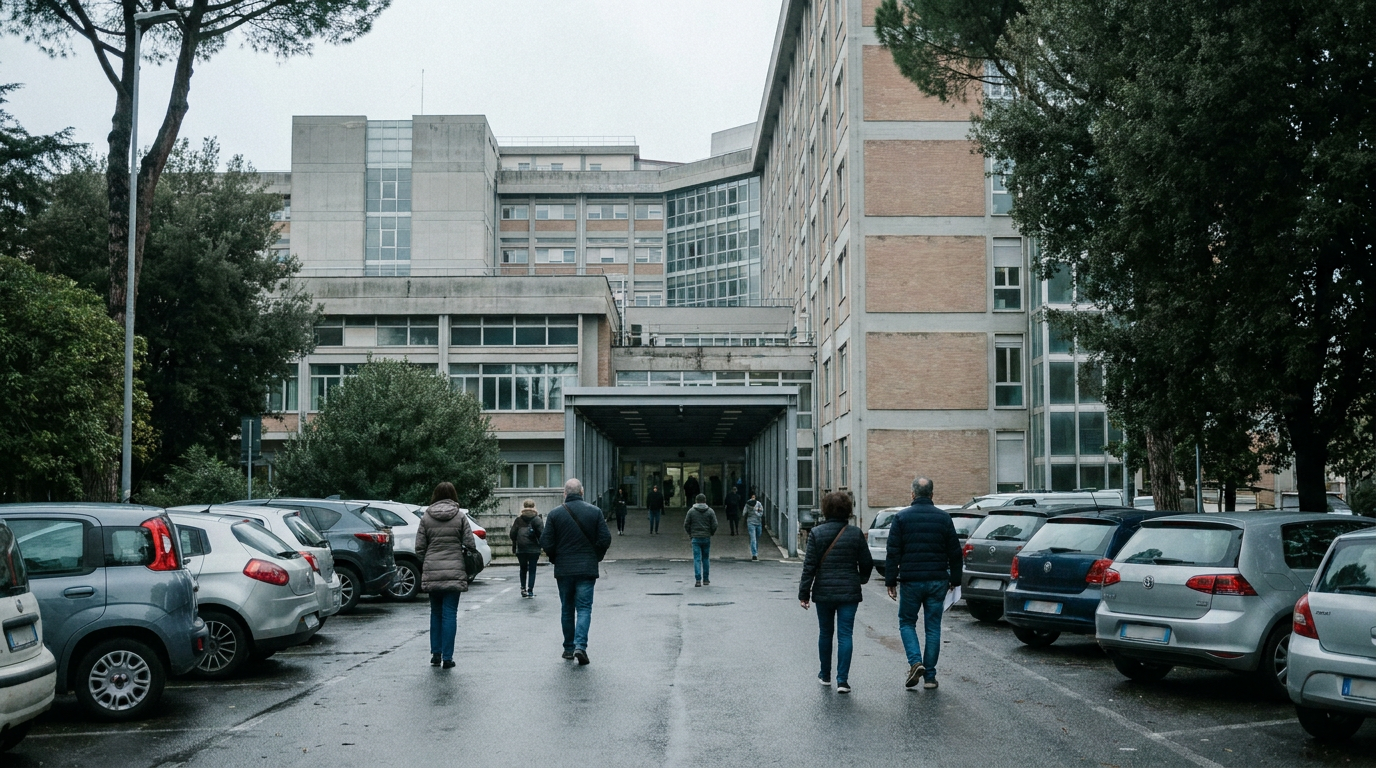
Pope Leo XIV will undergo an operation at Rome’s Gemelli Hospital after doctors discovered a nodule in his lung during a medical examination. The 71-year-old announced the decision on Sunday while addressing pilgrims gathered in St Peter’s Square at the Vatican.
Speaking in Italian at the noon Angelus blessing, Leo explained that his doctors had recommended removing the growth and that he had accepted their advice. He described the finding as confined to a clearly defined area and said it had been identified very early.
Matteo Bruni, spokesperson for the Holy See Press Office, said the procedure was scheduled for early in the week. The Vatican expects the Pope’s recovery to last approximately seven days. That is a forecast for his recuperation, rather than a statement that treatment has already taken place.
The announcement marks the first health concern of Leo’s papacy. It came during his regular Sunday encounter with the public, giving those assembled in the square the news directly from the Pope before the Vatican set out the expected timing of his treatment.
Leo ended his prayers by expressing gratitude for the support surrounding him and asking the faithful to pray for him. His remarks focused on the doctors’ recommendation and his decision to proceed with surgery.
The background
Leo became Pope in May 2025, when the world’s cardinals elected him to succeed Pope Francis. He is the first American to lead the Catholic Church and the 267th pope, beginning his pontificate after a period in which his predecessor’s declining health had repeatedly required hospital care.
Ordained in 1982, Leo spent years working as a missionary in Peru. His ministry there brought him into contact with marginalised communities, and the country remains part of his personal and pastoral history. His planned return in November will therefore take him back to a place where he served long before becoming Pope.
Leo has maintained an active lifestyle, playing tennis weekly and swimming at Castel Gandolfo, the papal summer retreat. In the days before Sunday’s announcement, he attended Mass at St Peter’s Basilica on 8 October to mark the opening of the pontifical universities’ academic year.
Gemelli Hospital has a longstanding role in caring for pontiffs. A dedicated papal suite was established there after the attempted assassination of Pope John Paul II in May 1981, and that accommodation remains in use. Francis also received treatment at the hospital.
Francis died aged 88 on 21 April 2025 after suffering a stroke. Before his death, he had undergone a lengthy hospital admission following a respiratory crisis that developed into pneumonia affecting both lungs.
His medical history included chronic lung disease and the removal of part of one lung when he was young. Those were conditions affecting Francis; Leo’s announcement concerns a newly discovered nodule for which his own medical team has recommended an operation.
What a lung nodule means
The National Health Service describes a lung nodule as a small lump of tissue, commonly found on a chest X-ray or CT scan. The term identifies a physical finding in the lung rather than, by itself, a particular disease or the reason the lump developed.
The American Cancer Society defines these nodules as abnormal areas smaller than 3cm across. They can appear on CT images of the chest or abdomen, meaning their discovery is not restricted to examinations specifically intended to look for lung cancer.
Some are found when scans are carried out for a different reason, such as investigating an injury or a lung infection. This is an important distinction when considering how a nodule comes to medical attention: a scan can reveal something beyond the condition it was originally intended to investigate.
Most lung nodules do not produce symptoms. Their detection during imaging can therefore precede any outward sign of illness. That general characteristic helps explain why medical examinations can identify them in people who have continued with their usual activities.
Possible causes include infections, autoimmune conditions and cancer, but most nodules are not cancerous. The word “nodule” should not be read as another name for cancer, and an operation to remove one does not itself establish its cause.
The description of Leo’s finding as early and localised concerns when it was detected and how contained it appeared. It is distinct from identifying the underlying condition. In his case, the medical decision announced on Sunday was to remove the growth rather than leave it in place.
What people are saying
Italian Prime Minister Giorgia Meloni expressed support for Leo both personally and on behalf of her government. She also pointed to the composed manner in which he had spoken about the operation, saying his approach had offered reassurance as he prepared for treatment.
Meloni was among the small number of people outside Francis’s immediate circle who visited him during his final extended hospital stay. Her response to Leo’s announcement follows that earlier personal contact with a pope receiving care at Gemelli.
Italy’s President Sergio Mattarella sent his wishes for a smooth recovery and a complete return to health. His message addressed both the immediate period of recuperation and the Pope’s recovery beyond the procedure itself.
Isaac Herzog, the president of Israel, also sent a message wishing Leo a swift and full recovery. His response added an international expression of support to those from Italy’s political leadership.
In Uruguay, the Archbishop of Montevideo, Daniel Sturla, called for prayers for the Pope and said work towards his forthcoming visit would continue with renewed enthusiasm. His response linked concern for Leo’s health with preparations already under way to receive him.
What happens next
The immediate next step is the scheduled operation, followed by the recovery period outlined by the Vatican. The intervention is planned before a substantial overseas programme in November, when Leo is due to travel through three South American countries.
The journey is scheduled for 6–17 November and will include Uruguay, Argentina and Peru. During Sunday’s service, Leo reaffirmed that he intended to make the visit, keeping the trip in his programme as he disclosed the need for surgery.
The itinerary combines a return to his former missionary home with visits to two other countries in the region. Preparations in Montevideo are continuing, with Sturla’s appeal asking Catholics to support the Pope through prayer while the practical work for the Uruguay visit proceeds.
Why this matters
For Catholics in the UK, the announcement brings an immediate focus on the health of their Church’s leader ahead of an international pastoral journey. Leo has asked for prayers as he prepares for treatment, while retaining his commitment to the November visit.
For readers encountering similar medical terminology, the practical distinction is between finding a lung nodule and diagnosing its cause. NHS information explains why these small growths can emerge during scans without symptoms; their range of possible causes means the term alone should not be treated as a cancer diagnosis.
Reporting that informed this story
- BBC News: Pope Leo to have surgery after lump found on lung
- Daily Mail: Pope Leo to undergo surgery 'in the coming days' after lump found on his lung
- The Guardian UK: Pope Leo to have surgery to remove nodule on his lung
This article was written independently by The Daily Times from publicly available facts and headlines. No text has been copied from the outlets above.