30ft sinkhole forces evacuations on Malibu beachfront
A driveway collapsed outside a Malibu home believed to belong to Nicolas Cage, causing a gas leak and prompting evacuations along the street.

By James Reeve, Foreign Affairs Writer
Published 9 Sept 2026, 12:03
What happened
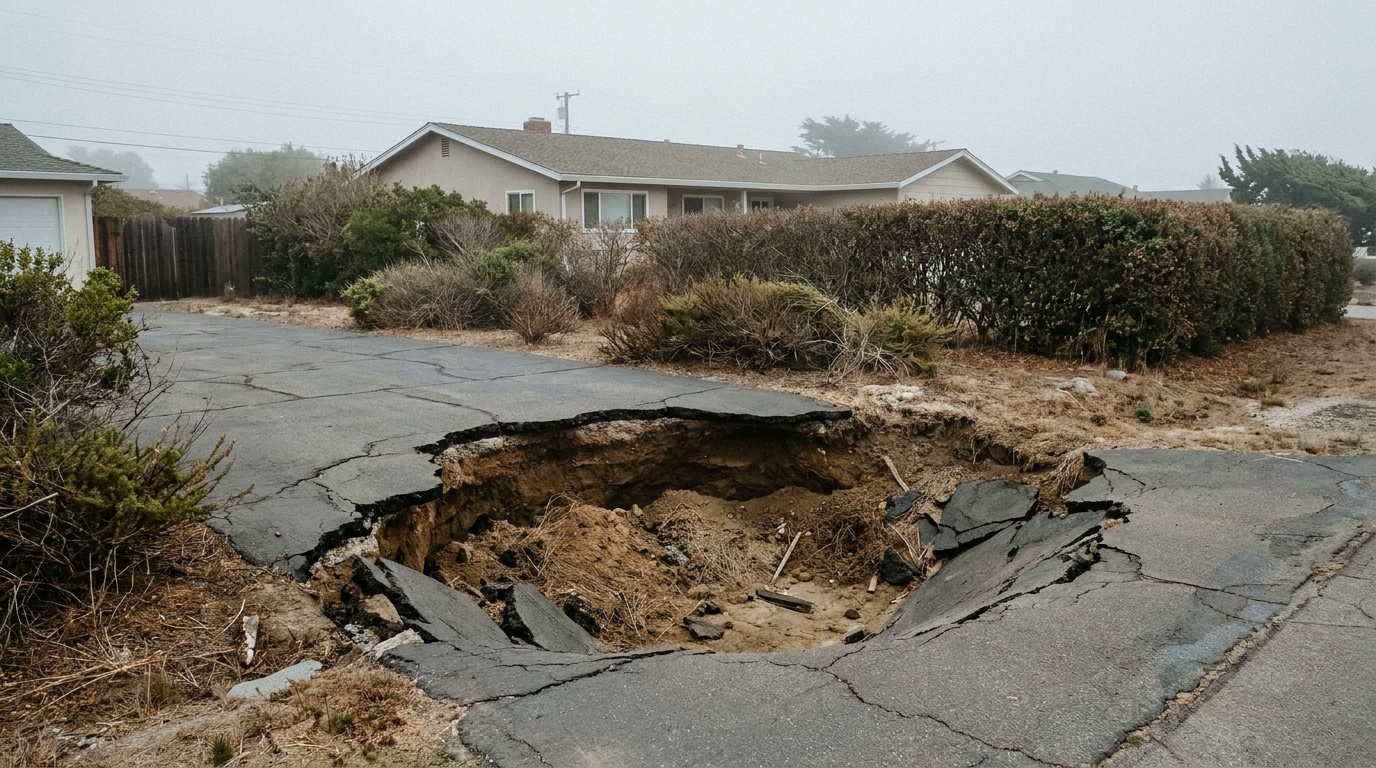
A large sinkhole has opened outside a beachfront home in Malibu, California, believed to belong to actor Nicolas Cage, damaging a driveway and forcing neighbours to leave their homes.
The opening was estimated to measure 30ft by 30ft, or about 9.1 metres by 9.1 metres. Much of the driveway fell into the crater, leaving broken asphalt, concrete and construction debris below the remaining surface.
Local authorities said the driveway collapsed on Tuesday morning. Emergency services attended in the early hours after the ground failure caused a gas leak. Southern California Gas Company, known as SoCalGas, later said it had secured the leak.
The City of Malibu ordered the evacuation of houses along the street and opened a temporary shelter for residents. Officials declared at least five homes unsafe to enter. No injuries were reported.
The damage also affected the road. City officials warned that emergency access was severely restricted and that the street could be impassable because a large section had collapsed.
Traffic cones were placed around the opening. Waves could be seen entering the crater and flowing back out beneath the supports of the house, putting the damaged area in direct contact with moving seawater.
The background
The collapse followed heavy rain across Southern California in recent days. A coastal flooding warning had also been issued for Los Angeles in connection with Tropical Storm Marie, which had previously been a hurricane.
Marie remained offshore but brought rain and high waves to the region. A storm does not have to cross the coast to create dangerous conditions on land: waves generated at sea can travel considerable distances before reaching the shore.
Coastal flooding happens when seawater reaches land that would normally be dry. Ground collapse involves the loss of support beneath a surface. The two hazards can occur during the same period of bad weather, but they are different processes.
Rain and waves can both affect coastal ground. Rainwater may soak into soil or collect along drainage routes, while seawater can move loose material at the shoreline. The presence of water at a collapse does not, on its own, establish what caused it.
Malibu's beachfront buildings sit close to the sea, with limited space between properties, access routes and the shoreline. That setting makes the condition of the ground beside a house important not only for the property but also for people trying to reach it.
Cage is understood to have bought the home in 2024. The Oscar-winning actor is known for Leaving Las Vegas, Face/Off, Con Air and Gone in 60 Seconds, alongside films including Moonstruck, Pig and The Unbearable Weight of Massive Talent.
Understanding the collapse
A sinkhole develops when the surface loses support from below. A gap can grow beneath apparently intact ground before the layer above gives way, making the final collapse seem sudden even when the underlying change has been gradual.
Water can contribute in several ways. It may wash soil through gaps, erode material around drainage channels or saturate the ground and make it less stable. In some geological settings, water gradually dissolves soluble rock and creates underground spaces.
The term sinkhole describes the visible opening but does not identify a single cause. Understanding an individual collapse requires examining the ground, the movement of water and any buried structures or services nearby.
A driveway depends on the material beneath its asphalt or concrete to spread the weight of vehicles. If that supporting layer moves or disappears, the hard surface can crack and fall in rather than hold together over the gap.
The edge of the visible hole is not necessarily the edge of the damage. Soil may have shifted beneath neighbouring paving without breaking the surface, leaving sections that look intact but cannot safely carry their usual load.
A house needs a separate structural assessment because its foundations carry weight differently from a driveway. A collapse beside a building does not by itself establish the condition of its foundations or supports.
What people are saying
Nearby residents described a smaller opening before the main collapse. They said they had been told on Monday that an 8ft sinkhole was forming, before further ground gave way in the early hours of Tuesday.
One neighbour described an initial expectation that the damage could be repaired quickly. Conditions then deteriorated sharply overnight, turning what residents had regarded as a manageable problem into a much larger emergency.
The city's warnings focused on the consequences for the whole street. Its unsafe-entry designations meant residents could not treat the incident simply as damage to one driveway, even if their own homes appeared unaffected.
Officials also highlighted access for emergency services. A damaged road can prevent crews from bringing vehicles and equipment close to an incident, while narrowing the routes available for residents to leave.
SoCalGas's confirmation addressed a separate immediate hazard. Securing a damaged gas supply reduces the danger associated with the leak, but it does not restore support beneath paving or make a damaged access route safe to use.
What happens next
The practical priorities are assessing the ground, protecting access and determining whether affected homes are safe to occupy. The temporary shelter gives displaced residents somewhere to go while the unsafe-entry restrictions remain in place.
An assessment of a collapse generally starts by establishing how far the loss of support extends and whether material is still moving. Specialists may examine drainage routes, buried pipes and the ground beneath adjacent surfaces rather than looking only inside the crater.
At a coastal site, tides and waves can affect when workers can approach the damaged area. Safe working space also matters: machinery, stored materials and removed debris all place additional weight on the ground.
Repairs need to address the underlying problem before replacing the surface. Where water has carried material away, that may involve managing its route and rebuilding a stable supporting layer, rather than simply filling the visible opening.
Rebuilding a road brings further requirements. The repaired ground must support traffic, and workers need to protect or restore utilities beneath it. Restricted access can complicate the delivery of equipment and the removal of damaged material.
Decisions about returning home also involve more than the building itself. Residents need a safe route in and out, and emergency services need suitable access. A sound structure and a usable street are distinct parts of making an area safe again.
Why this matters
For UK readers, the practical advice is to keep away from a fresh ground collapse, including its edges. Do not drive or place heavy objects nearby, and follow evacuation orders and access restrictions rather than relying on the appearance of the surface.
The Malibu incident does not indicate a similar risk at any particular UK property. Local geology, drainage and foundations determine conditions. Sudden ground movement needs professional assessment; immediate danger to people or a suspected gas leak requires urgent help from the relevant emergency service.
Reporting that informed this story
- BBC News: Watch: Sinkhole at Nicolas Cage's Malibu house swallows driveway
- BBC Entertainment: Nicolas Cage's driveway collapses as sinkhole opens up at his Malibu home
This article was written independently by The Daily Times from publicly available facts and headlines. No text has been copied from the outlets above.