Isaias weakens after Florida landfall as flood warnings remain
Power cuts affect hundreds of thousands across the south-eastern US after Isaias hit Florida, with flooding risks continuing as the storm moves inland.

By James Reeve, Foreign Affairs Writer
Published 10 Oct 2026, 07:00
What happened
Isaias has become a post-tropical cyclone after striking Florida’s northern Gulf coast, leaving widespread electricity outages and a continuing threat from flooding as it moves north. Hurricane warnings ended on Saturday morning, but warnings for coastal flooding and tropical storm conditions remained in force in parts of the region.
The storm reached land near Destin on Friday night as a category 2 hurricane with maximum sustained winds of 105mph. It was the first hurricane of the 2026 Atlantic season, arriving after eight earlier named storms had failed to develop beyond tropical storm strength.
By Saturday morning, more than 430,000 electricity customers in Florida and nearly 300,000 in Alabama were without power, according to PowerOutage.us. Georgia had about 40,000 customers disconnected. Outages had already affected hundreds of thousands across the south-east before the centre reached the coast.
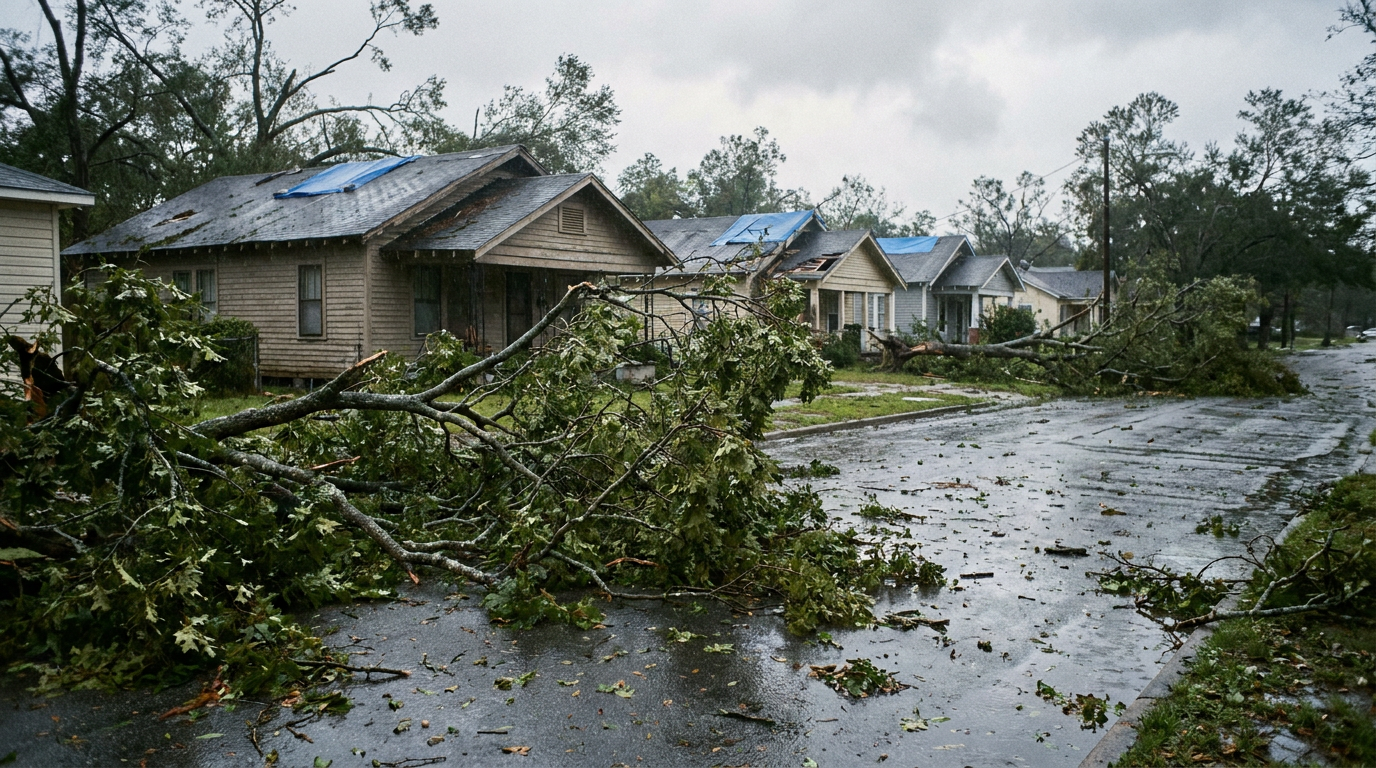
Pensacola, roughly 50 miles west of Destin, suffered damage to homes and businesses as winds tore away roofing and broke branches. A gust measured at the city hall reached 102mph. Fallen trees and debris obstructed streets while the city experienced heavy rain and power failures.
Elsewhere in the Florida Panhandle, a petrol station canopy collapsed in Crestview on Friday evening. At Panama City Beach, officials from the National Oceanic and Atmospheric Administration measured the water level at 5.4ft, or 1.64 metres, above average.
Storm-surge warnings had included possible flooding of up to 9ft in some places, with forecasts of up to 7ft around the Alabama-Florida boundary. On Saturday morning, a surge warning still covered parts of Florida, while tropical storm warnings applied in Florida and eastern Alabama.
The background
Isaias had reached category 3 strength earlier on Friday before weakening ahead of landfall. Forecasters had anticipated that changes in wind speed would reduce its intensity. Its smaller wind rating on arrival did not remove the danger from seawater pushed ashore or rainfall accumulating inland.
The storm also had a much wider reach than its centre alone suggested. On Friday evening, hurricane-strength winds stretched as far as 35 miles from the centre, while the area experiencing tropical storm-strength winds extended out to 205 miles.
The Atlantic’s unusually late start to hurricane activity followed El Niño conditions in the Pacific, which had helped delay development. This was the first season in more than three decades in which an Atlantic hurricane did not form until October.
Florida, Alabama, Georgia and Mississippi declared states of emergency. Mandatory evacuation orders in Florida and Alabama affected thousands of people, including residents of exposed Florida coastal communities. Alabama’s order covered non-residents, holidaymakers and other visitors in selected counties expected to face severe conditions.
Some prisons moved people in custody out of threatened locations. Most flights were grounded at several airports serving the Florida Panhandle, adding disruption for travellers as emergency preparations continued. Businesses also closed, including dozens of Waffle House restaurants, a chain known for operating through severe weather.
Offshore oil and gas operators halted a substantial portion of their Gulf production before the hurricane arrived. The Gulf supplies almost 15% of the crude oil produced annually in the United States, giving the storm an economic reach beyond the communities directly in its path.
What people are saying
Florida governor Ron DeSantis urged people to stay off the roads once the storm had arrived and warned that flash flooding threatened the wider region. Earlier, Florida senator Rick Scott had pressed residents covered by evacuation orders to leave promptly rather than delay their departure.
Alabama governor Kay Ivey said President Donald Trump had approved her state’s emergency declaration shortly before landfall. She said the approval would simplify arrangements for federal agencies helping with the response. Trump said late on Friday that his administration was closely monitoring the hurricane.
Melissa Watson, a Florida-based meteorologist with the National Weather Service, warned that tornadoes could accompany the system. She advised people who had stayed behind to keep several ways of receiving emergency alerts, be ready to reach higher ground near the coast and avoid going outside to photograph damage.
In Navarre, resident John Guoth chose to remain at home with his wife after other households on their street left. His preparations included moving ducks and chickens into a bathroom and securing boats and trailers against the wind. He described some of those staying as established local residents intent on protecting their homes.
In Pensacola, Brandin Ruth described preparations that included shutting off gas supplies to buildings, keeping products chilled with ice and sending staff home. Jonathan Ramos, a 40-year-old government employee staying in a hotel in the city, described frightening winds and a loss of electricity, and discouraged people from visiting to experience the storm.
What happens next
The forecast issued late on Friday placed Isaias on a route across Alabama and towards the Tennessee Valley over Saturday and Sunday. Winds were also expected to reach further into Georgia, though with less force. The inland track brings the rain and flooding threat beyond the coastal evacuation areas.
Florida’s National Guard deployed about 5,000 soldiers and air personnel to support the response. A separate deployment of around 400 Florida State Guard personnel included teams assigned to assess damage and help clear routes, work needed where trees and debris have blocked access.
The Florida Fish and Wildlife Conservation Commission prepared equipment for reaching flooded or damaged areas: 10 airboats, 18 shallow-draft boats, nine all-terrain vehicles and six larger platform vessels. That fleet gives response teams different options for operating across waterways and terrain affected by the storm.
Transport assistance to evacuation shelters includes a partnership between Florida and Uber, offering free return journeys to state-approved shelters with a limit of $40 each way. Waffle House, meanwhile, said it would keep reviewing conditions after closing restaurants along the hurricane’s route.
Two Pacific systems are also affecting North America this weekend. Hurricane Simon was forecast to strengthen from category 1 to category 4 by Saturday before reaching land near Puerto Vallarta in Mexico on Sunday. Tropical Storm Rachel was expected near the US-Mexico border late on Saturday; high tides had already contributed to flooded streets in southern California.
Why this matters
For UK holidaymakers in the affected states, local evacuation instructions apply to visitors as well as residents where specified. Alabama explicitly included tourists in its mandatory order. With flights grounded at several Panhandle airports and accommodation areas affected by power failures, the disruption extends beyond places with visible structural damage.
The distinction between a hurricane’s classification and its remaining hazards is important for anyone following the storm or travelling in the region. Isaias’s downgrade describes a change in the weather system, not an end to its effects: coastal surge warnings remained active on Saturday, and the forecast route carried heavy-weather risks further inland through the weekend.
Reporting that informed this story
- BBC News: Hurricane Isaias downgraded after making landfall in Florida
- The Guardian UK: Hurricane Isaias makes landfall in Florida and hammers Gulf coast
This article was written independently by The Daily Times from publicly available facts and headlines. No text has been copied from the outlets above.