US Navy confirms eight suicide attempts in Lincoln strike group
The disclosure follows concerns about sailors’ welfare during an extended deployment to the Middle East as part of the US war on Iran.

By James Reeve, Foreign Affairs Writer
Published 24 Sept 2026, 07:01
What happened
Eight sailors serving with the USS Abraham Lincoln carrier strike group attempted suicide during its extended deployment, the US Navy has confirmed. The disclosure follows concerns raised by families about mental health and living conditions during the mission connected to the US war on Iran.
Acting Navy Secretary Hung Cao set out the figure in a letter sent on Tuesday to Kirsten Gillibrand, the Democratic senator for New York. He was answering questions about personnel welfare on behalf of US Defence Secretary Pete Hegseth.
The total covers personnel across the naval formation, rather than only those serving aboard the aircraft carrier. It includes sailors attached to its air wing, accompanying destroyers, command staffs and other aviation units deployed with the group.
Cao described two incidents during the deployment. Shipmates intervened to protect a sailor in March. Another sailor was rescued in August, received medical treatment and was subsequently moved off the ship for further care.
The carrier itself had about 5,000 people aboard. That figure describes the population of the Lincoln, not everyone serving throughout the wider strike group covered by the Navy’s disclosure of eight attempts.
The background
The Lincoln left California last November, initially heading for the South China Sea. It was later redirected to the Middle East before attacks on Iran began in February, changing the geographical focus of its deployment.
The original schedule would have brought the deployment to an end in May. Instead, it was extended repeatedly while the war remained unresolved, keeping personnel away beyond the point at which they had expected the mission to finish.
In August, the US sent another aircraft carrier, the USS George Washington, to replace the Lincoln after its nine-month deployment. That move provided a replacement for the carrier’s operational role as preparations progressed for its journey back to the United States.
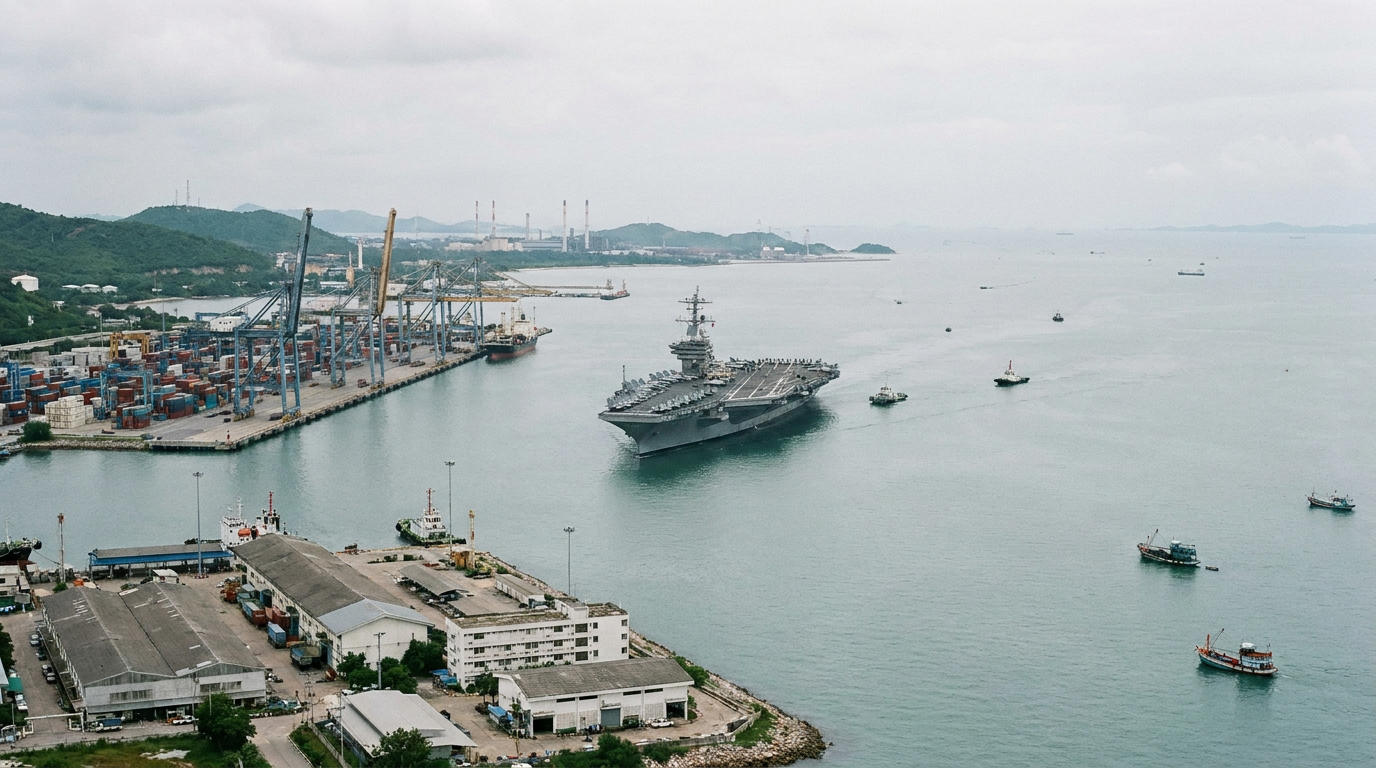
After 286 days at sea, Lincoln personnel went ashore in Thailand on 1 September. Sailors visited bars, shopping centres and beach areas during the stop, their first opportunity to spend time on land during the deployment.
The carrier departed Laem Chabang, near Pattaya, on 6 September. The Thai port call formed part of its homeward journey, following the prolonged period spent deployed away from its base in California.
Concern about conditions had intensified in August, when accounts of worsening mental health appeared in two military publications. Those disclosures prompted Democratic politicians to demand an investigation into the circumstances facing sailors during the extended mission.
Life aboard the carrier
Cao said the crew had access to several mental health professionals and five chaplains. His response maintained that support was adequate to address personnel’s emotional and spiritual needs during the deployment, despite the concerns raised about their wellbeing.
The Navy had previously accepted that the Lincoln faced difficulties with supplies, while rejecting the description of a mental health crisis aboard the ship. Those were distinct parts of its response: an acknowledgement of logistical problems and a denial of the broader assessment of crew welfare.
Food arrangements were among the issues addressed in the letter. Cao acknowledged that the choice of main courses was temporarily cut from two options to one, explaining that the change was intended to help the ship sustain its operational presence.
He said four nutritionally balanced meals continued to be provided each day. The Navy’s account therefore distinguished between a reduction in the range of dishes offered and the daily number of meals available to those aboard.
Cao also accepted that some replenishment of crew supplies had been delayed. Allegations aired in August had included dwindling stocks of food and soap, alongside mould in showers and difficulties obtaining other everyday necessities.
His response rejected claims of widespread plumbing failures and fresh-food shortages, but acknowledged temporary faults affecting individual sections of pipework. It also identified problems with the ship’s reverse-osmosis desalination equipment, which turns seawater into fresh water.
What people are saying
Gillibrand, who serves on the Senate armed services committee, criticised the administration of Donald Trump on Wednesday. She argued that its earlier dismissal of concerns had failed to recognise serious deterioration in the conditions experienced by service personnel.
Her criticism also focused on military families. She contrasted the sacrifices made by troops and their relatives with the administration’s response, and challenged its spending priorities when sailors were experiencing problems with welfare and basic living conditions.
Hegseth had defended the military’s handling of the deployment in August. He argued that coverage had distorted the situation and maintained that commanders, crews and ships were being given everything the administration could provide for them.
A Navy official responded on Wednesday by emphasising the service leadership’s commitment to sailors’ health, wellbeing and morale. That assurance came alongside Cao’s account of the professional and pastoral support available during the deployment.
The wider concern extends beyond this single carrier. An analysis of military figures by USNI News identified suicide as a leading cause of death in the US Navy and Marine Corps, placing personnel welfare among the services’ significant health challenges.
Research released in January 2025 examined 956 sailors and found the highest levels of serious psychological distress among personnel aboard Navy ships compared with other branches of the US military. It identified difficult accommodation, noise and work patterns that restricted sleep and rest as particular pressures.
Separately, the US Veterans Administration has identified higher suicide rates among veterans than among Americans who have not served. That finding concerns the veteran population, rather than the serving sailors counted in Cao’s letter, and provides a different measure of military-related health needs.
What happens next
The Lincoln is returning to the United States after the stop in Thailand. Its return follows the deployment of the George Washington as its replacement, allowing the homeward passage to proceed while another carrier takes over its role.
Gillibrand’s questions have produced a formal written response from the acting Navy secretary. The correspondence places the suicide-attempt total, staffing for welfare support and acknowledged supply and maintenance problems before a senator whose committee scrutinises the armed forces.
For the sailor rescued in August, treatment continued beyond the immediate emergency through transfer away from the ship. That step was part of the follow-up care described by Cao, rather than solely the onboard response to the incident.
Why this matters
For UK readers, the disclosure offers an insight into the personnel demands behind a major American deployment to the Middle East. The Lincoln’s journey began with a different destination, before its reassignment connected the crew’s extended absence to the war on Iran.
It also highlights why shipboard welfare involves more than access to clinical support. The research on serving sailors identifies accommodation, working hours and opportunities for sleep as relevant pressures, alongside the food, water and everyday supplies needed to sustain life at sea.
Reporting that informed this story
- The Guardian UK: Eight USS Lincoln personnel have attempted suicide, US navy confirms
- BBC News: Eight US sailors assigned to USS Abraham Lincoln attempted suicide, Navy says
This article was written independently by The Daily Times from publicly available facts and headlines. No text has been copied from the outlets above.