Flydubai co-pilot attacked captain with crash axe, UAE says
UAE investigators say the attack on flight FZ1073 was an attempted act of terrorism, after passengers helped stop a takeover of the aircraft.

By James Reeve, Foreign Affairs Writer
Published 3 Oct 2026, 13:00
What happened
An attack on the captain of an Israel-bound passenger aircraft was an attempt to commit terrorism using an emergency axe carried on the plane, the United Arab Emirates prosecutor general has said. The finding concerns flydubai flight FZ1073, which diverted to Saudi Arabia after passengers and crew stopped the co-pilot taking control.
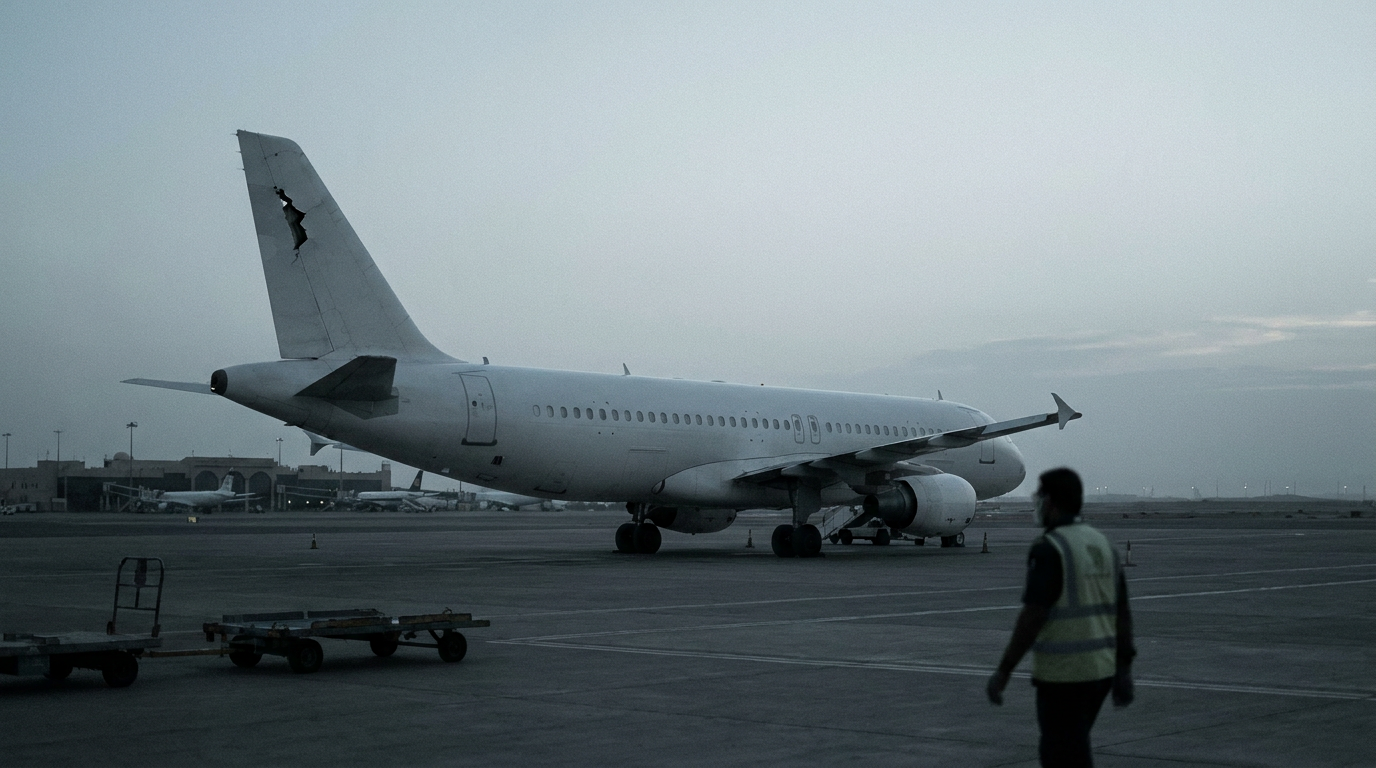
The aircraft had left Dubai for Tel Aviv on Wednesday with 182 people aboard. Around two and a half hours into the journey, it descended 16,625ft in little more than half a minute. The forces during the descent tore away a section of its rudder.
Captain Smit Machchhar, an Indian national, suffered multiple stab wounds during the cockpit assault. He managed to release the cockpit door despite his injuries, enabling passengers to enter and confront the attacker while the aircraft was losing height.
On Saturday, prosecutor general Hamad Saif Al Shamsi identified the weapon as a crash axe. Such tools are normally stored in aircraft cockpits for emergencies, including fires and crashes. That finding places the weapon among the aircraft's emergency equipment, rather than identifying it as something carried through passenger security.
The aircraft transmitted two different emergency signals during the incident. It first used transponder code 7700, which alerts air traffic controllers to a general emergency, and then 7500, the code for unlawful interference, including hijacking.
Passenger Almog Itali described a sudden, forceful drop lasting roughly 20 to 30 seconds, followed by a brief levelling of the aircraft and another descent. He said people then began moving towards the cockpit as the emergency unfolded.
Once the attacker had been restrained, two reserve pilots travelling on the flight took over. They brought the aircraft down at Tabuk airport in north-western Saudi Arabia at 06.58 local time. Most of those travelling on the flight were Israeli nationals.
The background
The co-pilot has been identified as Hamam al-Hammami, an Omani national. His previous employment included a role at Oman Air, where concerns about extremist views led to his removal from flying duties and a move into administrative work, according to a Gulf official. He subsequently joined flydubai.
His education also included a British university qualification. Buckinghamshire New University said he completed a three-year aviation management degree through distance learning, graduating in 2023. The institution distinguished that academic course from flight instruction: he did not train there to become a pilot.
The recruitment history has put aviation background checks under scrutiny. A former flydubai crew member said the airline's pilots undergo security screening before flights and medical examinations at least annually. Those procedures form part of the employment and operational background investigators are examining after an attack originating inside the cockpit.
The route brings a further security issue. Israel says its arrangements with foreign airlines exclude pilots from its airspace if they are nationals of countries that have no diplomatic relations with Israel. Oman and Israel do not have formal diplomatic ties, making the co-pilot's assignment to this service a question for the inquiry.
The captain initially received treatment at a hospital near the diversion airport before being flown to Abu Dhabi. The co-pilot was also taken to the UAE, which is directing the investigation. Their transfers followed the emergency landing rather than a continuation of the scheduled journey to Tel Aviv.
What people are saying
In a video conversation with Indian Prime Minister Narendra Modi, Machchhar described being injured on the cockpit floor and using his remaining strength to open the door. He explained that his determination to protect those aboard helped drive that decision while he was also fighting to survive.
Israeli President Isaac Herzog credited passenger Tali Manes with raising the alarm after she heard noise from the cockpit. On Thursday, he identified her husband, Zvika Manes, and three other men — Yaniv Hayun, Dr Shota Musayev and Asaf Rajuan — as those who entered after the captain opened the door.
Hayun described the assailant attempting to damage cockpit instruments. He said he used a chokehold to pull the man out of the flight deck, where other passengers helped hold him down. Hayun also described moving the aircraft's controls before a pilot took over from him.
The Indian embassy in the UAE gave a positive account of Machchhar's recovery on Thursday, saying he was in good health and progressing well. The captain also expressed confidence that he would regain his health following the injuries he sustained during the assault.
Anwar Gargash, a senior adviser to the UAE president, characterised the incident on Friday as a serious act of terrorism. His assessment preceded the prosecutor general's Saturday statement identifying both the weapon and the alleged terrorist nature of the attack.
Israeli Prime Minister Benjamin Netanyahu said the co-pilot had undergone Islamist radicalisation and suggested that he intended to bring down the aircraft. Netanyahu also said the attacker had asked the crew to kill him after being subdued. Those statements set out Israel's assessment of his behaviour and intentions.
What happens next
Investigators are examining whether the co-pilot acted independently or had links to an extremist organisation, a Gulf diplomat said. That distinction remains central to the inquiry into motive: the UAE's description of an attempted terrorist attack does not itself establish that a wider group directed it.
Security agencies from four countries in the region are working on the motive investigation, with assistance from the United States and other western governments, according to an official. Israel is among the countries participating in the wider UAE-led inquiry into what happened aboard the flight.
Netanyahu said Israel was investigating whether anyone had instructed the co-pilot to act. He also warned of consequences for others involved. That line of inquiry extends beyond the confrontation aboard the aircraft to any possible direction given before departure.
Flydubai said on Saturday that the investigation was continuing and declined to discuss the circumstances further. Its services linking Dubai and Tel Aviv have been suspended until further notice, interrupting the route on which the attack took place.
Why this matters
For UK passengers planning travel between Dubai and Tel Aviv, the immediate practical consequence is the suspension of flydubai's service. The disruption concerns that international connection, including for travellers whose wider itineraries involve either city; the emergency flight itself ended in Saudi Arabia rather than at its intended destination.
The British connection concerns a management degree, not pilot training. That distinction matters when considering the co-pilot's route into airline employment: Buckinghamshire New University's distance-learning qualification and the decisions allowing him to work on a flight deck were separate parts of his background.
Reporting that informed this story
- The Guardian UK: Flydubai co-pilot used crash axe to attack captain, says UAE
- BBC News: Flydubai co-pilot attacked captain with axe, UAE official says
This article was written independently by The Daily Times from publicly available facts and headlines. No text has been copied from the outlets above.