Iran awaits formal US answer after Trump rejects Hormuz proposal
Iran says it is awaiting Washington’s diplomatic response to its proposal for reopening the Strait of Hormuz, despite Donald Trump’s public rejection.

By Robert Aldridge, Senior Reporter
Published 27 Sept 2026, 07:00
What happened
Iran is waiting for a formal American response to its proposal to reopen the Strait of Hormuz after President Donald Trump publicly dismissed the offer on Saturday. Foreign Minister Abbas Araghchi said Iranian negotiators would decide their next move once mediators delivered Washington’s position.
Writing on Telegram, Araghchi acknowledged the president’s rejection but pointed to inconsistencies in his previous statements. His position leaves a distinction between what Trump has said publicly and the answer Iran expects through the diplomatic channel handling the negotiations.
Speaking to journalists at the White House, Trump said the proposed arrangement was unacceptable. He described an Iranian offer to restore access for commercial vessels within seven days and presented Tehran’s willingness to negotiate as a consequence of the pressure it was facing.
Trump also asserted that the United States controlled the strait and that substantial quantities of oil were moving through it. Those were the president’s claims about conditions in the waterway, which has been effectively closed since war broke out in February.
The seven-day period was part of Trump’s account of Iran’s offer, rather than an agreed reopening timetable. His rejection concerned a proposal intended to restore commercial passage through one of the world’s most important energy routes.
The background
Around a fifth of the world’s oil and gas supply normally travels through the Strait of Hormuz. Its importance extends well beyond trade with Iran: disruption at this narrow maritime passage affects the movement of energy supplies into the wider international market.
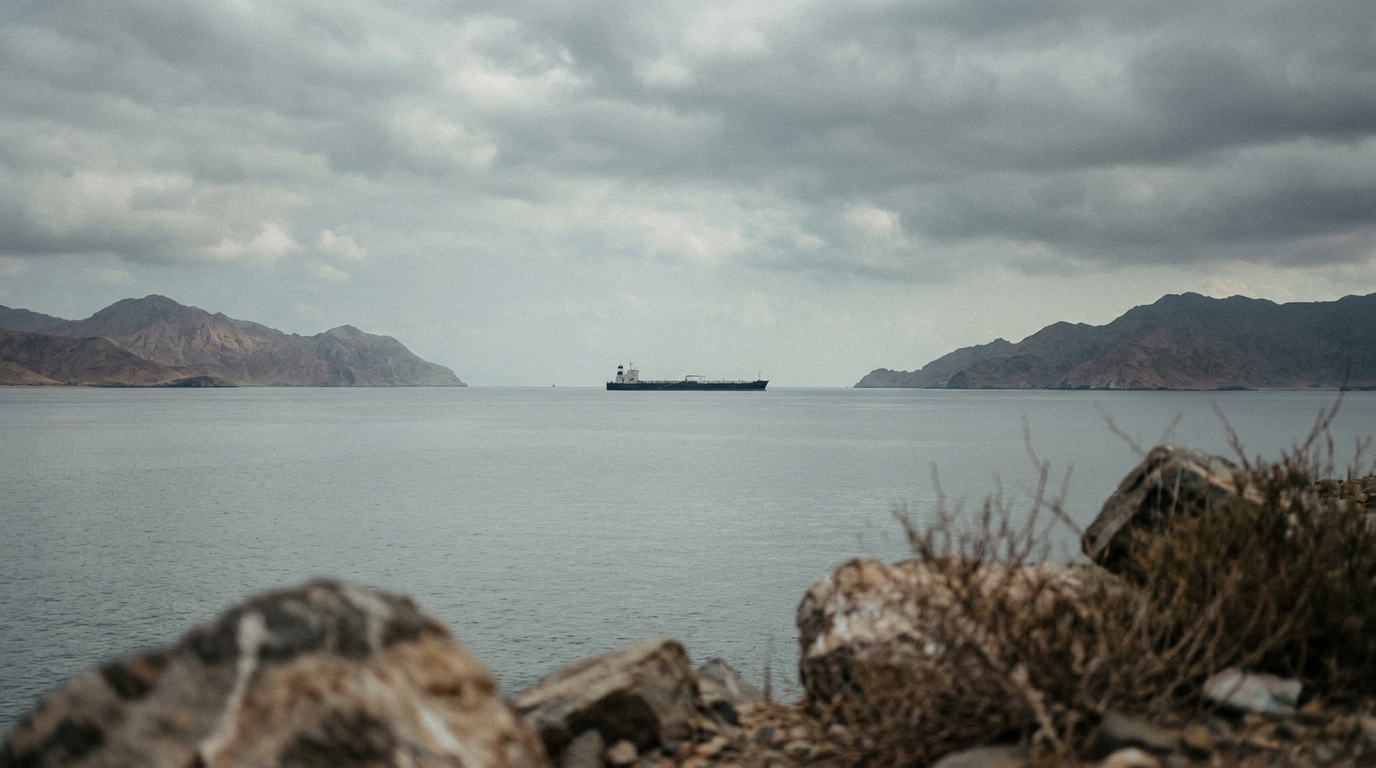
The strait connects the Gulf with the Gulf of Oman and the Arabian Sea. Ships serving Gulf energy exporters must pass through it to reach the open ocean, concentrating a large volume of trade along a geographically restricted route. That makes freedom of navigation central to the dispute.
The conflict that began in February has brought a prolonged interruption to that traffic. Global oil prices have risen sharply, while consumers have faced steep increases in fuel costs. The economic effects therefore reach countries far from the fighting, including those buying energy on international markets.
Araghchi said Iran’s conditions for reopening the passage matched those contained in a memorandum of understanding signed by the United States and Iran in June. Tehran is presenting its current position as consistent with that earlier diplomatic agreement, rather than as a departure from it.
Iran said it discussed both reopening the strait and ending hostilities during talks held alongside the United Nations General Assembly in New York this past week. Commercial navigation and the wider conflict were therefore both subjects of the discussions, although they involve different practical objectives.
Restoring shipping would address access to the waterway; ending hostilities would address the fighting surrounding the crisis. That distinction matters when assessing a diplomatic proposal: movement on maritime access is not, by itself, the same thing as a comprehensive settlement of a war.
What people are saying
Matthew Whitaker, the US ambassador to Nato, supported Trump’s decision. In an appearance on Fox News on Saturday, he characterised Iran’s offer as inadequate and designed to improve Tehran’s international standing. His intervention reinforced the administration’s public opposition to the proposal.
Oman, which is mediating between Washington and Tehran, urged the parties to keep talking. Its foreign minister, Sayyid Badr bin Hamad bin Hamood Albusaidi, used his address to the UN General Debate to call for cooperation with Omani efforts to protect navigation through the strait.
Araghchi maintained that negotiations were the route to ending the conflict. His response to Trump focused on obtaining a settled American position through the mediators, rather than treating the president’s remarks to journalists as the final communication in the negotiating process.
The public positions place different emphases on the same crisis. Washington’s representatives are defending the rejection of the offer, Iran is seeking a diplomatic answer on which to base a decision, and Oman is pressing for continued engagement over safe maritime passage.
The economic pressure
Alongside diplomacy, the Trump administration is pursuing an economic blockade it calls Operation Economic Outcast. The White House is using financial pressure in an attempt to make Iran halt attacks on vessels in the Strait of Hormuz, linking its sanctions campaign directly to maritime security.
US Treasury Secretary Scott Bessent argued on Saturday that the measures were hurting Iran. In a post on X, he said Turkey, Oman and the United Arab Emirates had stopped flights operated by several Iranian airlines. His examples extended the pressure campaign beyond the shipping sector.
Bessent also said some banks in the United Arab Emirates and Turkey had ceased transactions with Iran. Restrictions on financial dealings work differently from transport restrictions: they affect the channels used to make payments, rather than the physical movement of passengers or goods.
Some economists have questioned how effective the latest sanctions will be, pointing to the importance of decisions made by Iran’s principal trading partners. Measures imposed by Washington do not determine every trading relationship; their effect also depends on how other governments and businesses respond.
China is the largest purchaser of Iranian oil and has continued trading with Tehran despite earlier American sanctions. That existing commercial relationship is central to the question of whether additional economic pressure can change Iran’s calculations, even as Bessent highlights restrictions elsewhere.
What happens next
The next step described by Araghchi is for mediators to convey Washington’s definitive response. Iran would then make its decision on that basis. The immediate diplomatic process therefore runs through intermediaries, whose role includes carrying positions between the two governments as well as encouraging further discussion.
For commercial shipping, an agreement would need to translate into usable passage. Access on paper and the practical movement of vessels are separate stages: ships must be able to make the transit for reopening to restore the energy flows normally associated with the strait.
Oman’s appeal centres on cooperation to safeguard that navigation. Its mediation addresses a practical issue alongside the exchange of negotiating positions: protecting a route used by commercial vessels whose journeys connect Gulf suppliers with customers across the world.
Why this matters
For UK motorists, the immediate relevance is the international price of oil, which feeds into the cost of producing petrol and diesel. Crude prices are not the only component of pump prices—tax, refining and distribution also matter—but disruption to a major supply route adds pressure to the market supplying forecourts.
For households and businesses using gas, the strait’s role in global energy trade creates another exposure. Britain’s energy costs are influenced by international markets, not simply by whether an individual shipment is destined for a UK port. The consequences of restricted passage can therefore spread beyond the countries directly buying cargoes from the Gulf.
Reporting that informed this story
This article was written independently by The Daily Times from publicly available facts and headlines. No text has been copied from the outlets above.